
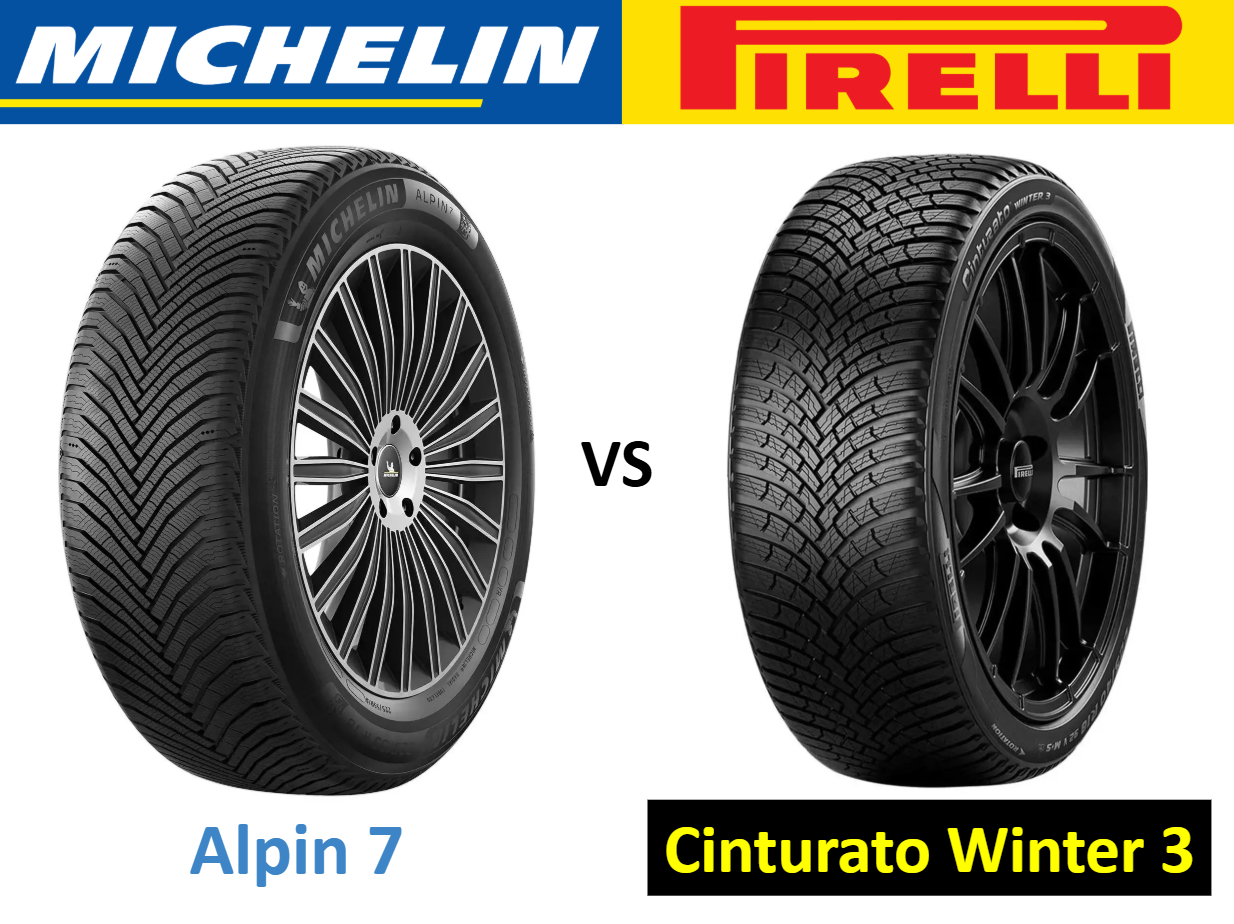
The Michelin Alpin 7 vs Pirelli Cinturato Winter 3 is shaping up to be one of the most interesting Central European winter tire battles of the season. Michelin’s latest-generation Alpin 7 goes head-to-head with the all-new Cinturato Winter 3, as two premium brands fight for the best balance of wet grip, snow performance, dry handling and everyday winter efficiency. With Pirelli bringing a completely new contender into the segment, this is a battle worth watching closely.
Table of Contents
Results: Michelin Alpin 7 vs Pirelli Cinturato Winter 3
Results below were taken from 2026 ADAC Winter Tyre Test with a total of 15 tires tested. The graph below shows the comparison between Michelin Alpin 7 vs Pirelli Cinturato Winter 3 based on the relevant performance category. The Michelin Alpin 7 was set as a reference hence at the 100% mark.
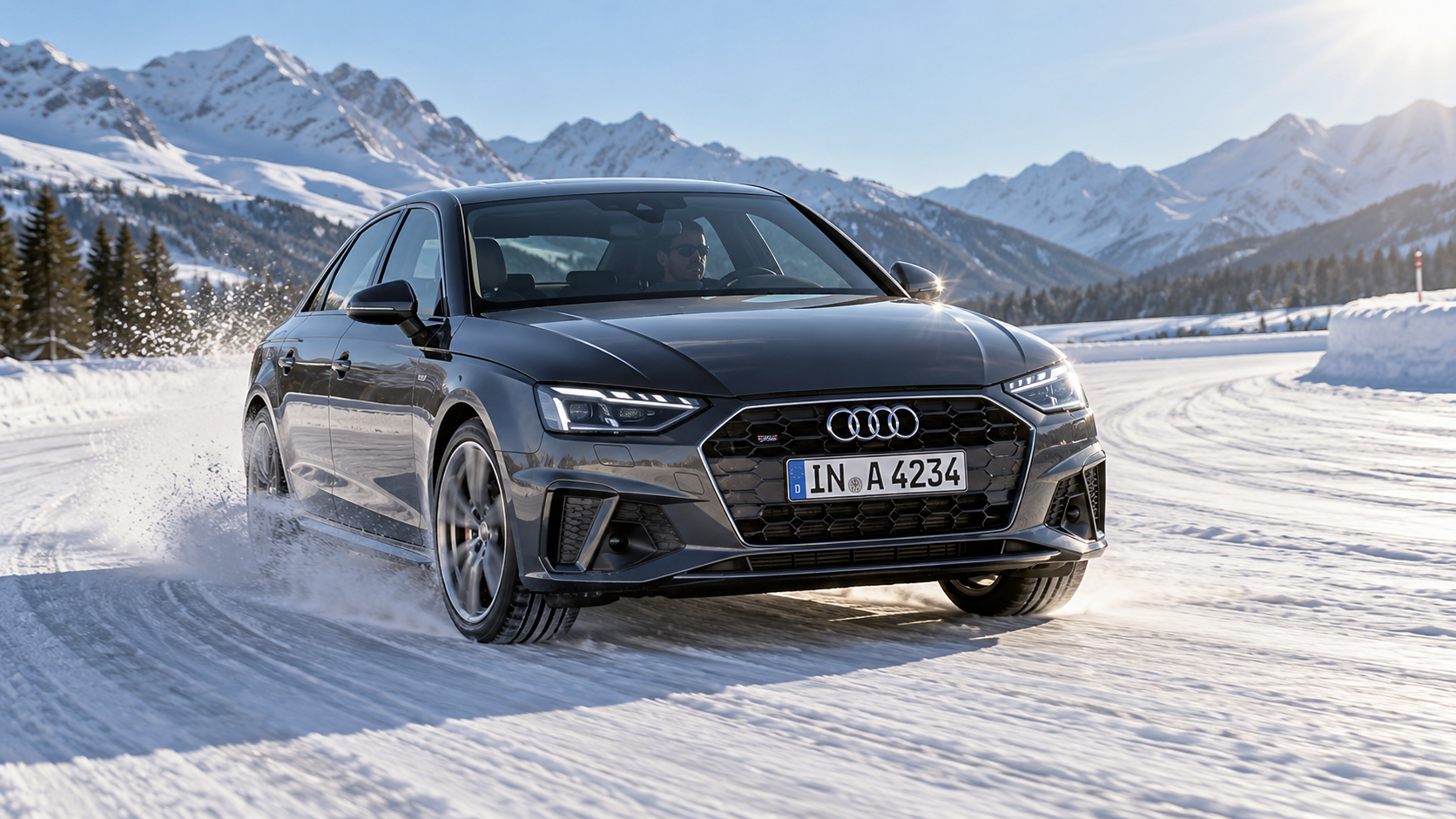
Since we are talking about the middle European winter segment with both tires having the converted 3 peak mountain logo, snow performances was tested. The tire size of interest is 225/50 R17 which is a common tire size for BMW 3 Series & Audi A4. You can check out our latest tire size table for more information. The testing vehicle is a Audi A4.
Wet
In wet braking, the Pirelli Cinturato Winter 3 stopped in 34.7 m, which is 2.1 m shorter than the Michelin Alpin 7 at 36.8 m, giving the Pirelli a 6% advantage. In straight aquaplaning, the Pirelli reached 85.0 km/h, which is 6.4 km/h higher than the Michelin’s 78.6 km/h, an 8% advantage.
Overall, the Cinturato Winter 3 is clearly stronger in the wet, combining noticeably shorter braking distances with much better aquaplaning resistance.
Cinturato Winter 3 :
- +6% in wet braking
- +8% in straight aquaplaning
Snow
In snow braking, the Michelin Alpin 7 stopped in 9.8 m, just 0.1 m shorter than the Pirelli Cinturato Winter 3 at 9.9 m, giving the Pirelli a 1% disadvantage. In snow traction, the Michelin produced 2,698 N, which is 100 N more than the Pirelli’s 2,598 N, giving the Pirelli a 4% disadvantage.
Overall, the Alpin 7 has the edge on snow, with similar braking performance but a more noticeable advantage in traction.
Cinturato Winter 3 :
- -1% in snow braking
- -4% in snow traction
Ice
In ice braking, the Michelin Alpin 7 stopped in 16.9 m, which is 1.2 m shorter than the Pirelli Cinturato Winter 3 at 18.1 m. This gives the Pirelli a 7% disadvantage compared with the Michelin.
Overall, the Alpin 7 is clearly stronger on ice, with a meaningful advantage in braking safety.
Cinturato Winter 3 :
- -7% in ice braking
Mileage
In wear, the Michelin Alpin 7 lasted 46,800 km, which is 3,700 km longer than the Pirelli Cinturato Winter 3 at 43,100 km, giving the Pirelli an 8% disadvantage. In abrasion, the Michelin recorded 74 mg/km/t, which is 6 mg/km/t lower than the Pirelli’s 80 mg/km/t, giving the Pirelli a 7% disadvantage. Overall, the Alpin 7 is stronger for longevity and tire wear efficiency, lasting longer while also producing less abrasion.
Cinturato Winter 3 :
- -8% in mileage
- -7% in abrasion
Dry
In dry braking, the Pirelli Cinturato Winter 3 stopped in 44.4 m, which is 1.3 m shorter than the Michelin Alpin 7 at 45.7 m, giving the Pirelli a 3% advantage.
Cinturato Winter 3 :
- +3% in dry braking
NVH
In exterior noise, the Pirelli Cinturato Winter 3 recorded 70.9 dB, which is 0.8 dB quieter than the Michelin Alpin 7 at 71.7 dB, giving the Pirelli a 1% advantage.
Cinturato Winter 3 :
- +1% in exterior noise (-0.8 dB)
Fuel Consumption
In fuel consumption, the Pirelli Cinturato Winter 3 used 5.5 l/100 km, which is 0.1 l/100 km less than the Michelin Alpin 7 at 5.6 l/100 km, giving the Pirelli a 2% advantage.
Cinturato Winter 3 :
- +2% in fuel consumption
Price
For 225/50 R17, the Michelin Alpin 7 costs €137, while the Pirelli Cinturato Winter 3 costs €151. That makes the Pirelli €14 more expensive, or about 9% more.
What surprised us here is that the Michelin is actually the cheaper tire. Michelin is usually positioned at the very top end of the premium market, so seeing the newer Cinturato Winter 3 carry the higher price makes the Alpin 7 look particularly competitive on value.
Tire size: 225/50 R17
- Alpin 7 : € 137
- Cinturato Winter 3 : € 151
Difference: +9% more expensive for Cinturato Winter 3
Conclusion from a Tire Expert’s Perspective:
From my perspective as a tire engineer, these two tires take noticeably different approaches. The Pirelli Cinturato Winter 3 is the stronger choice for wet performance, with better wet braking and aquaplaning resistance, while also holding small advantages in dry braking, exterior noise and fuel consumption.
The Michelin Alpin 7 fights back where winter performance matters most, with better snow traction, ice braking, wear and abrasion, while also being €14 cheaper in this comparison. For me, the Michelin is the more winter-focused and value-oriented package, while the Pirelli stands out for drivers who prioritize wet-road safety and everyday refinement.
Dr Edwin Pang