
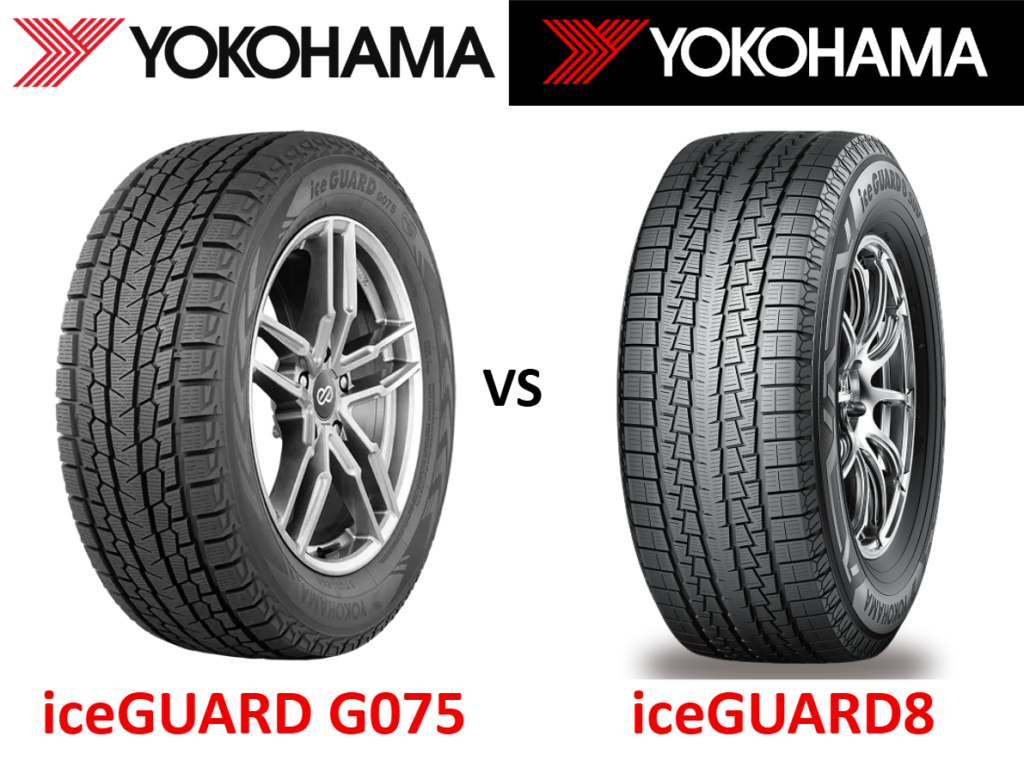
Yokohama iceGUARD SUV G075 vs iceGUARD8 SUV: A decade after the iceGUARD SUV G075 debuted, Yokohama is taking its biggest swing yet at the SUV winter tire market. The new iceGUARD 8 SUV brings a fresh rubber compound and a tread pattern built from the ground up for SUVs. Yokohama had ten years to raise the bar. Did it build a worthy successor to the G075?
Table of Contents
Results: Yokohama iceGUARD SUV G075 vs iceGUARD8 SUV
Results below were taken from the JATMA’s published results. The graph below shows the comparison between Yokohama iceGUARD SUV G075 vs iceGUARD8 SUV based on the relevant performance category. The Yokohama iceGUARD SUV G075 was set as a reference hence at the 100% mark.
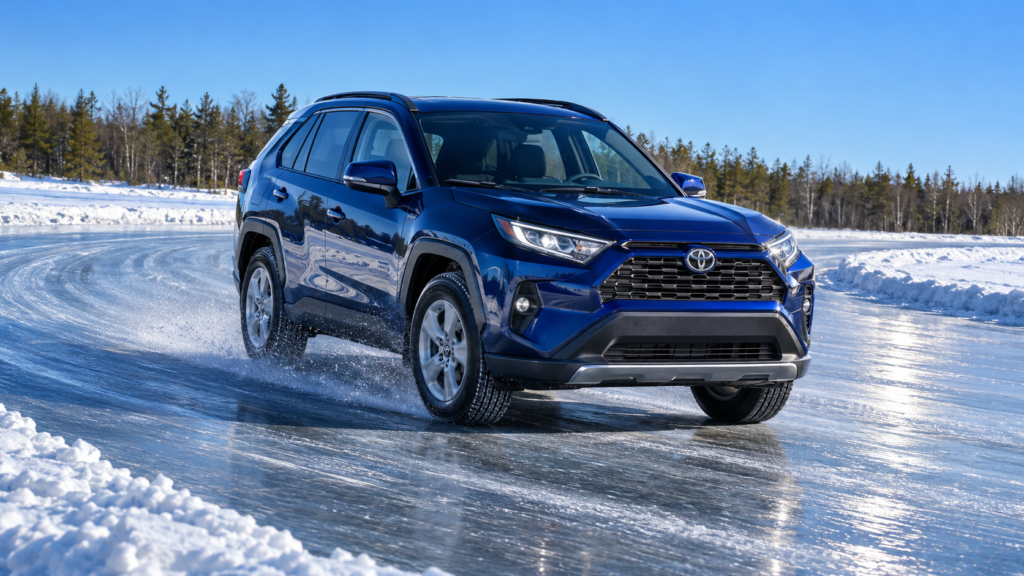
The tire size of interest is 225/65R17 which is a common tire size for Honda CRV & Mazda CX-5. You can check out our latest tire size table for more information. The testing vehicle is a Toyota RAV4 (AWD).
Ice
The iceGUARD 8 SUV stopped in 15.8 metres on ice, compared with 17.9 metres for the iceGUARD SUV G075. That’s 2.1 metres shorter, a 13% advantage on the performance index.
In ice cornering, the new tire completed the lap in 18.1 seconds versus 20.6 seconds for the G075. That’s 2.5 seconds quicker, a 14% advantage on the same index. The new tire is a clear step forward on ice, both under braking and through corners.
iceGUARD8 SUV :
- +13% in Ice braking
- +14% in Ice handling (lap time)
Snow
On snow, the iceGUARD 8 SUV stopped in 23.2 metres versus 24.2 metres for the iceGUARD SUV G075. That’s 1.0 metre shorter, a 4% advantage on the performance index. It’s a modest gain that gives the new tire an edge on snow as well as ice.
iceGUARD8 SUV :
- +4% in Snow braking
Wet
In the wet, the iceGUARD SUV G075 stopped in 76.1 metres, while the iceGUARD 8 SUV needed 77.6 metres. The new tire took 1.5 metres longer to stop, scoring 2% lower on the performance index. Watch our video to find out more about the ice vs wet target conflict.
iceGUARD8 SUV :
- -2% in Wet braking
Dry
In the dry, the iceGUARD 8 SUV stopped in 49.4 metres versus 51.6 metres for the iceGUARD SUV G075. That’s 2.2 metres shorter, a 4% advantage on the performance index. After a small setback in the wet, the new tire pulls ahead again on dry roads.
iceGUARD8 SUV :
- +4% in Dry braking
Mileage
The iceGUARD 8 SUV is projected to last 47,808 km, compared with 43,067 km for the iceGUARD SUV G075. That’s 4,741 km more, an 11% gain in predicted tread life. The extra mileage adds to the new tire’s gains on ice and snow.
iceGUARD8 SUV :
- +11% in Mileage
Rolling resistance
The iceGUARD 8 SUV measured 8.1 N/kN in rolling resistance, compared with 9.2 N/kN for the iceGUARD SUV G075. That’s 1.1 N/kN lower, a 14% advantage on the performance index. The new tire takes less energy to keep rolling.
iceGUARD8 SUV :
- +14% in Rolling resistance
Summary
In my view, Yokohama delivered a substantial upgrade. The iceGUARD 8 SUV stopped 2.1 metres shorter on ice and lapped the ice course 2.5 seconds quicker than the G075. It also stopped shorter on snow and dry roads, reduced rolling resistance, and is projected to last 4,741 km longer.
The clearest engineering trade-off is between ice grip and wet braking. The new tire made its biggest gains on ice, while the G075 still stopped 1.5 metres shorter in the wet. If I regularly drove on ice and snow, I’d choose the iceGUARD 8 SUV.
Dr Edwin Pang