
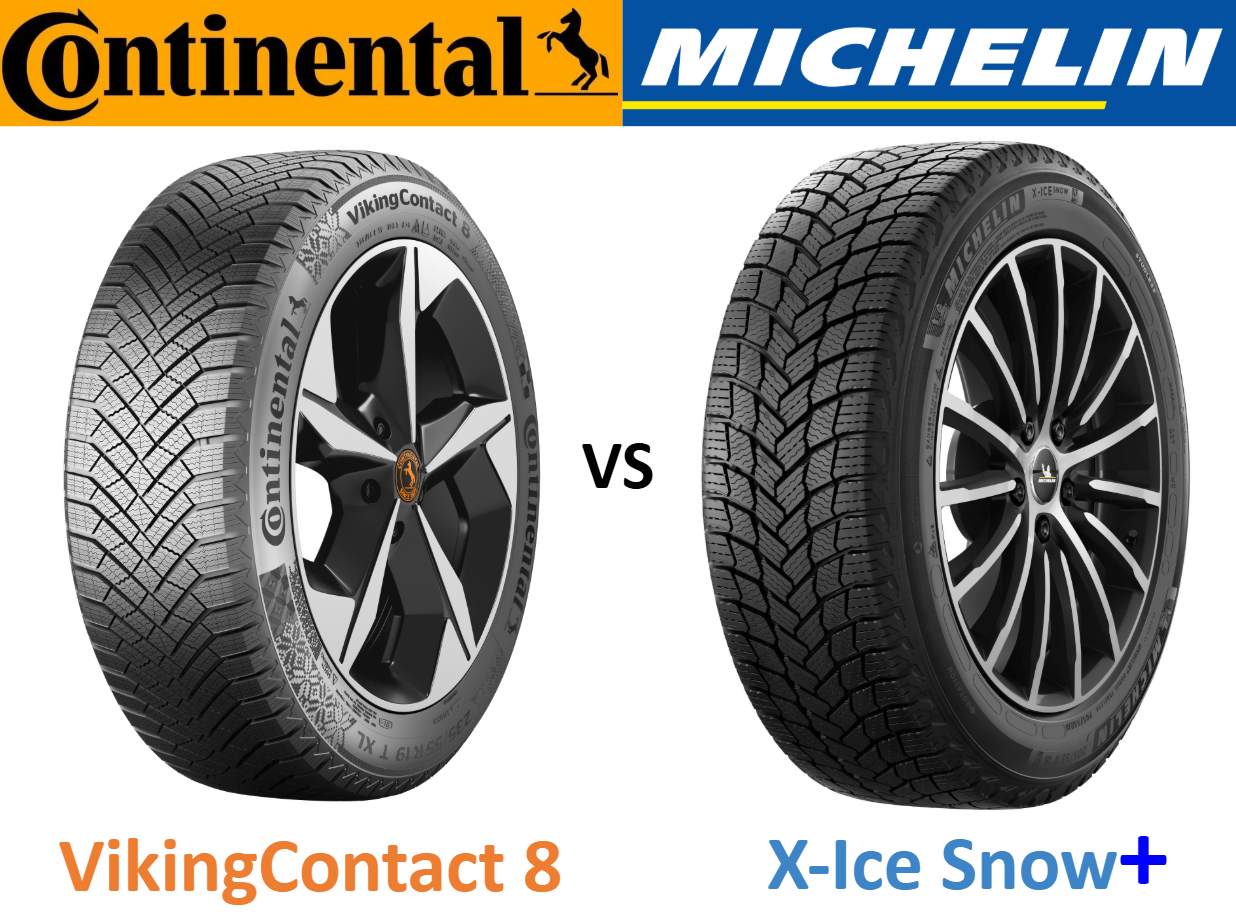
Continental VikingContact 8 vs Michelin X-Ice Snow+: The Continental VikingContact 8 is already a benchmark in the studless winter tire segment, but Michelin is back with the upgraded X-Ice Snow+, now featuring a revised compound aimed at stronger winter performance. The question is simple: does Michelin now have what it takes to beat Continental on ice and snow without giving up wet and dry performance? This is shaping up to be one serious winter tire battle.
Table of Contents
Results: Continental VikingContact 8 vs Michelin X-Ice Snow+
Results below were taken from 2026 Aftonbladet Winter Tire Test with a total of 12 tires tested. The graph below shows the comparison between Continental VikingContact 8 vs Michelin X-Ice Snow+ based on the relevant performance category. The Continental VikingContact 8 being the older tire was set as a reference hence at the 100% mark.
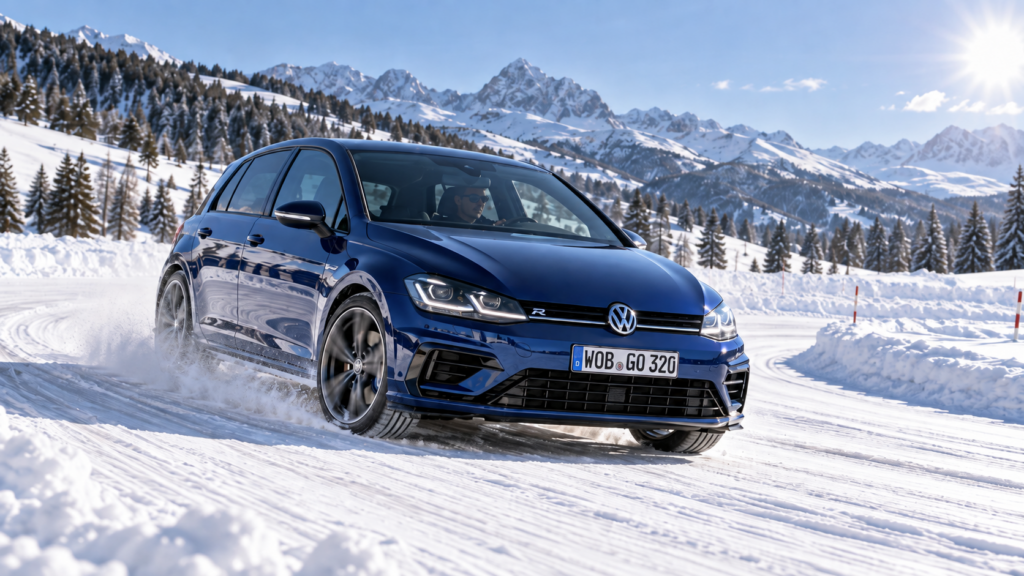
Note that for subjective ratings, 1 point is equivalent to 10%. So if tire A has a 4 point rating & tire B has a 3 point rating, tire A is better than tire B by 10%. The tire size of interest is a 205/55 R16 which is a common tire size for Toyota Corolla. The testing vehicle is a Volkswagen Golf.
Ice
On ice, the Continental VikingContact 8 had a clear advantage in braking and acceleration. It stopped 5.4 meters shorter, at 47.1 m versus 52.5 m, making the Michelin X-Ice Snow+ 10% behind. Continental was also 1.6 seconds quicker in acceleration, at 7.3 seconds versus 8.9 seconds, giving Michelin an 18% deficit.
Michelin fought back in ice handling lap time, completing the lap 0.7 seconds faster, at 52.0 seconds versus 52.7 seconds, a 1% advantage. Subjectively, however, Continental scored 1 point higher, 8/10 versus 7/10, giving Michelin a 5% disadvantage. Overall, Michelin showed strong outright handling pace, but Continental was clearly stronger in the key ice braking and acceleration tests.
X-Ice Snow+ :
- -10% in ice braking
- -18% in ice acceleration
- +1% in ice handling (lap time)
- -5% in ice handling (subj)
Snow
On snow, the two tires were much closer. The Continental VikingContact 8 stopped 1.2 meters shorter, at 50.1 m versus 51.3 m, putting the Michelin X-Ice Snow+ 2% behind. Snow acceleration was identical at 6.6 seconds, so there was no difference between them.
In snow handling, Continental was 0.4 seconds quicker, at 46.5 seconds versus 46.9 seconds, giving Michelin a 1% disadvantage. Subjectively, Continental also scored 1 point higher, 9/10 versus 8/10, putting Michelin 5% behind. Overall, snow performance was very close, but Continental held a small and consistent edge in braking, handling pace, and driver confidence.
X-Ice Snow+ :
- -2% in snow braking
- 0% in snow acceleration
- -1% in snow handling (lap time)
- -5% in snow handling (subj)
Wet
In the wet, the Michelin X-Ice Snow+ clearly turned the tables. It stopped 5.1 meters shorter, at 31.6 m versus 36.7 m, giving Michelin a strong 16% advantage in wet braking. Around the wet handling track, Michelin was also 2.2 seconds faster, at 38.7 seconds versus 40.9 seconds, a 6% advantage.
Subjectively, Michelin scored 1 point higher, 9/10 versus 8/10, giving it a 5% advantage. Overall, wet performance was a clear strength of the X-Ice Snow+, with Michelin outperforming Continental across braking, lap time and driver confidence.
X-Ice Snow+ :
- +16% in wet braking
- +6% in wet handling (lap time)
- +5% in wet handling (subj)
Dry
In the dry, the Michelin X-Ice Snow+ again held the advantage. It stopped 0.7 meters shorter, at 31.7 m versus 32.4 m, giving Michelin a 2% advantage in dry braking. Subjectively, Michelin also scored 1 point higher, 9/10 versus 8/10, a 5% advantage. Overall, Michelin was slightly stronger in the dry, with better braking and a more confident handling feel.
X-Ice Snow+ :
- +2% in dry braking
- +5% in dry handling (subjective)
Subjective Noise
For subjective noise, the Continental VikingContact 8 scored 1 point higher, at 10/10 versus 9/10 for the Michelin X-Ice Snow+. That puts Michelin 5% behind. Overall, Continental was the quieter and more refined tire of the two.
X-Ice Snow+ :
- -5% in subj noise
Price
In 205/55 R16, the Continental VikingContact 8 costs €150, while the Michelin X-Ice Snow+ costs €135. That makes the Michelin €15 cheaper, or about 11% less expensive. Considering Michelin’s strong wet and dry performance, the lower price makes the X-Ice Snow+ especially competitive on value.
Tire size: 205/55 R16
- VikingContact 8 : € 150
Difference: +11% more cheaper for X-Ice Snow+
Conclusion
From my perspective, the Continental VikingContact 8 is still the stronger pure winter tire. Its advantage on ice is substantial, especially in braking and acceleration, and it also holds a consistent edge on snow. The upgraded Michelin X-Ice Snow+ has clearly improved where Michelin wanted it to, with much stronger wet performance and a small advantage in the dry. But that raises the key question: for a studless winter tire, was shifting more performance toward wet roads really necessary if it comes at the expense of ice and snow capability? For drivers facing genuine Nordic winter conditions, I would still see the VikingContact 8 as the more convincing winter-focused package.
Dr Edwin Pang