
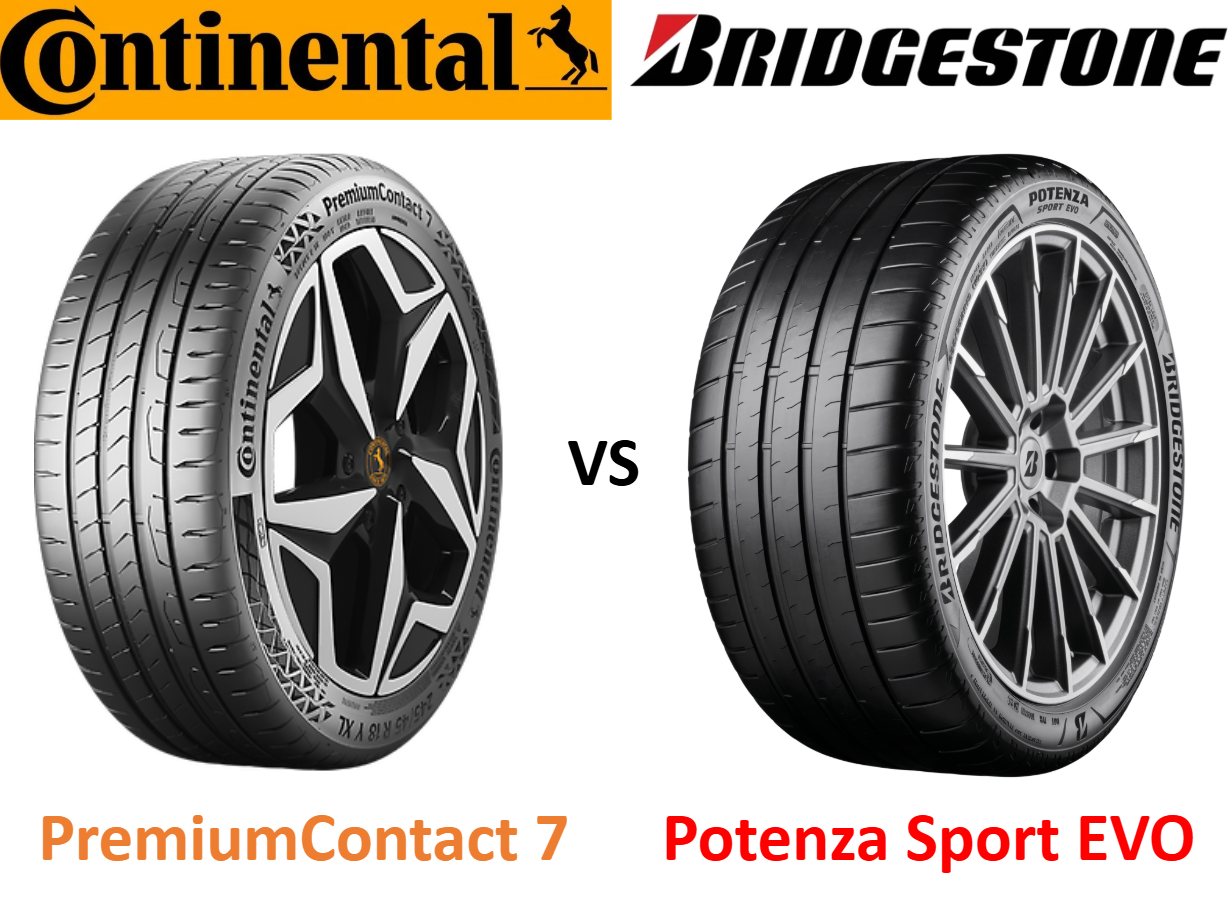
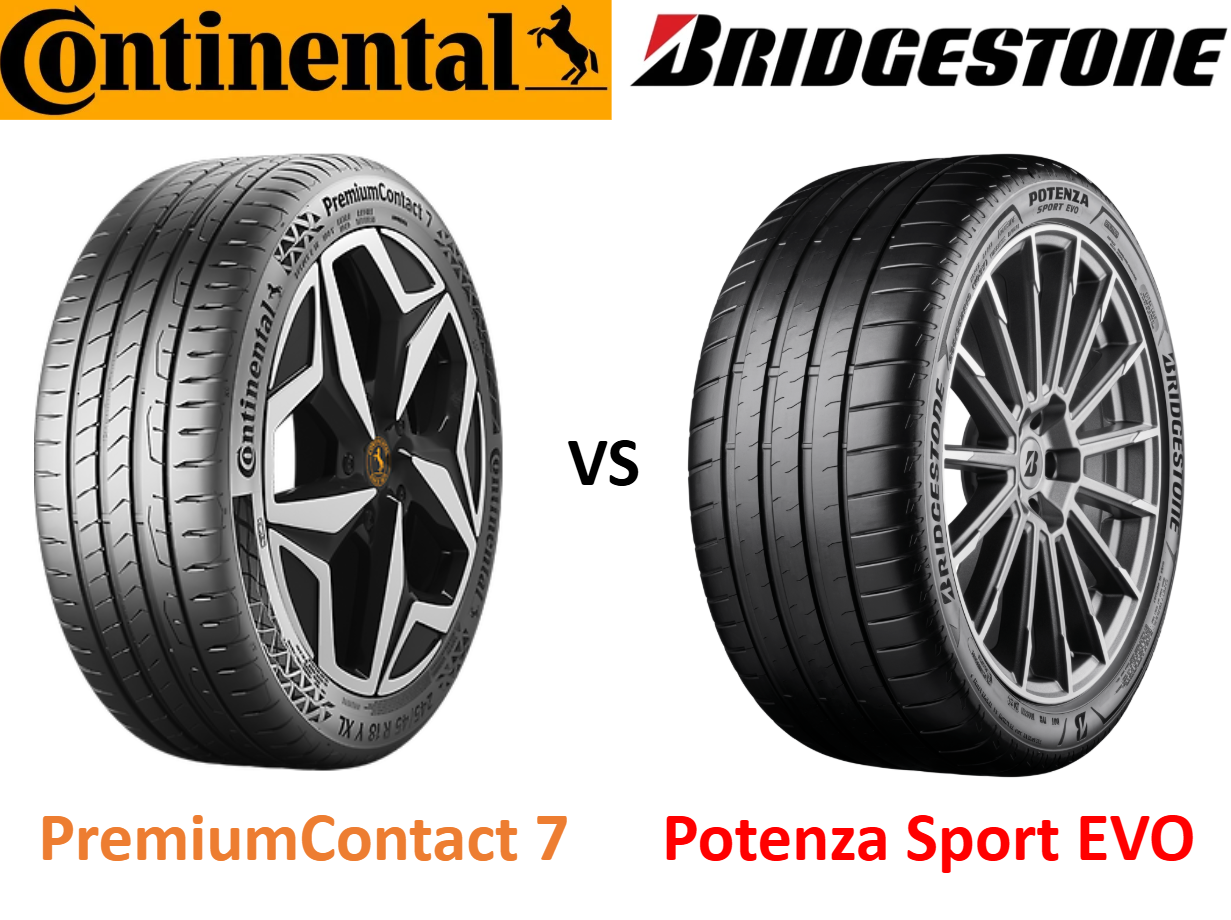
Continental PremiumContact 7 versus Bridgestone Potenza Sport Evo — a clash between Continental’s UHP gem and Bridgestone’s all-new 2026 UUHP weapon. The PremiumContact 7 represents Continental’s signature approach to ultra-high performance — delivering a refined balance of wet safety, comfort, and everyday usability, making it one of the most complete UHP tires on the market. On the other side, the Potenza Sport Evo arrives fresh in 2026, built with a clear focus on sharper dynamics, higher grip limits, and a more aggressive driving character, pushing deeper into the UUHP space.
So the question is simple: do you go for Continental’s proven all-round excellence, or Bridgestone’s newest performance-focused evolution?
Table of Contents
Results: Continental PremiumContact 7 vs Bridgestone Potenza Sport Evo
The results presented here are from the Auto Bild 2026 Summer Tire Test, where 20 of the best summer tire models were selected. The accompanying graph provides a side-by-side comparison of the Continental PremiumContact 7 vs Bridgestone Potenza Sport Evo across various performance categories, with the Continental PremiumContact 7 serving as the benchmark at 100%.
The tire size of interest is the 245/45R19 tire size, a popular choice for vehicles like the BMW 5 series & Audi A6. For further insights into various tire sizes, feel free to consult our latest tire size table. The tests were conducted using a BMW 5 series as the test vehicle.
Wet
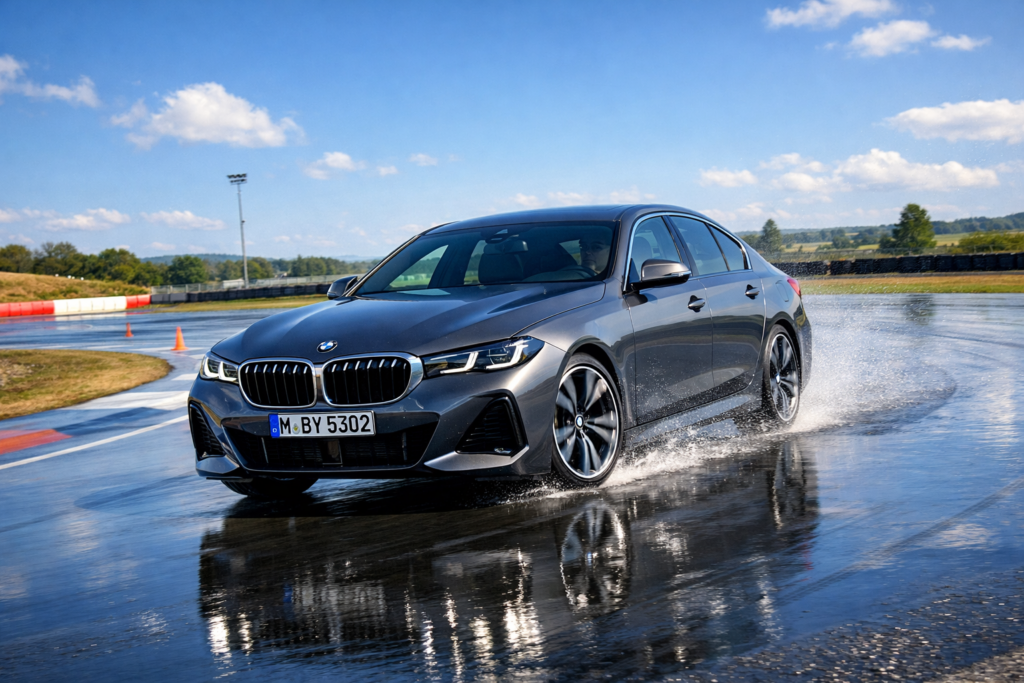
In wet braking, the Continental PremiumContact 7 stops 1.4 meters shorter than the Bridgestone Potenza Sport Evo, giving it a 3% advantage in emergency stopping distance. Moving into wet handling, both tires are essentially identical, with the Potenza Sport Evo just 0.1 km/h faster, which translates to a 0% difference, while subjective wet handling is also matched at 8 out of 10, again showing no difference (0%) in driver confidence.
For straight aquaplaning, the PremiumContact 7 holds a slight edge at 91.5 km/h versus 91.1 km/h, a 0.4 km/h advantage, but this rounds to a 0% difference, meaning both tires behave almost identically in standing water. Overall, while the PremiumContact 7 shows a small but clear advantage in wet braking, the rest of the wet performance metrics are effectively matched, making both tires equally strong and confidence-inspiring in wet conditions.
Potenza Sport Evo :
- -3% in wet braking
- 0% in wet handling
- 0% in subj wet handling
- 0% in aquaplaning
Dry
In dry braking, the Continental PremiumContact 7 stops 0.2 meters shorter than the Bridgestone Potenza Sport Evo, giving it a slight 1% advantage. Moving into dry handling, the Potenza Sport Evo is just 0.3 km/h faster, which translates to a 0% difference, while subjective dry handling is identical at 6.7 out of 10, showing no difference (0%) in driver feedback and balance.
Overall, both tires are extremely closely matched in dry conditions, with the PremiumContact 7 holding a marginal edge in braking, while the Potenza Sport Evo slightly leads in handling speed, but in real-world terms, the performance difference is essentially negligible.
Potenza Sport Evo :
- -1% in dry braking
- 0% in dry handling
- 0% in subj dry handling
Wear
In wear, the Continental PremiumContact 7 lasts 4,490 km longer than the Bridgestone Potenza Sport Evo, translating to an 8% advantage in mileage. Looking at abrasion, the PremiumContact 7 loses 231 grams less rubber compared to the Potenza Sport Evo, which equates to a 15% advantage, clearly indicating lower material loss and better durability.
Overall, the PremiumContact 7 shows a clear lead in longevity, both in real-world mileage and material wear, making it the stronger choice for long-term durability.
Potenza Sport Evo :
- -8% in mileage
- -15% in abrasion
Comfort & Noise
In subjective comfort, the Bridgestone Potenza Sport Evo scores 0.7 points higher than the Continental PremiumContact 7, translating to a 3.5% advantage, indicating a more compliant and comfortable ride. However, in noise, the PremiumContact 7 is 1.1 dB quieter than the Potenza Sport Evo, giving it a 1% advantage, suggesting slightly better acoustic comfort.
Potenza Sport Evo :
- +3.5% in subj comfort
- -1% in noise (+1.1 dB)
Rolling Resistance
In rolling resistance, the Continental PremiumContact 7 records 0.91 N/kN lower than the Bridgestone Potenza Sport Evo, translating to a 10% advantage, meaning it requires less energy to roll.
Potenza Sport Evo :
- -10% in rolling resistance
Price
For the 245/45R19 size, the Bridgestone Potenza Sport Evo is €7 more expensive than the Continental PremiumContact 7, translating to a 4% higher price.
Tire size: 245/45 R19
- PremiumContact 7 : € 191
- Potenza Sport Evo : € 198
Difference: +4% more expensive for Potenza Sport Evo
Summary
From my perspective as a tire engineer, this is a surprisingly close fight — the Continental PremiumContact 7, a UHP “all-rounder,” goes head-to-head with the more aggressive 2026 Bridgestone Potenza Sport Evo (UUHP) and holds its ground impressively. The PremiumContact 7 stands out with better wet braking, longer wear, lower rolling resistance, and quieter refinement, showing how strong its overall balance is, while the Potenza Sport Evo delivers only better ride comfort. What really stands out is how the PC7’s balanced engineering brings UHP-level usability with near-UUHP performance, proving that raw segment positioning doesn’t always dictate real-world capability.
Dr Edwin Pang