
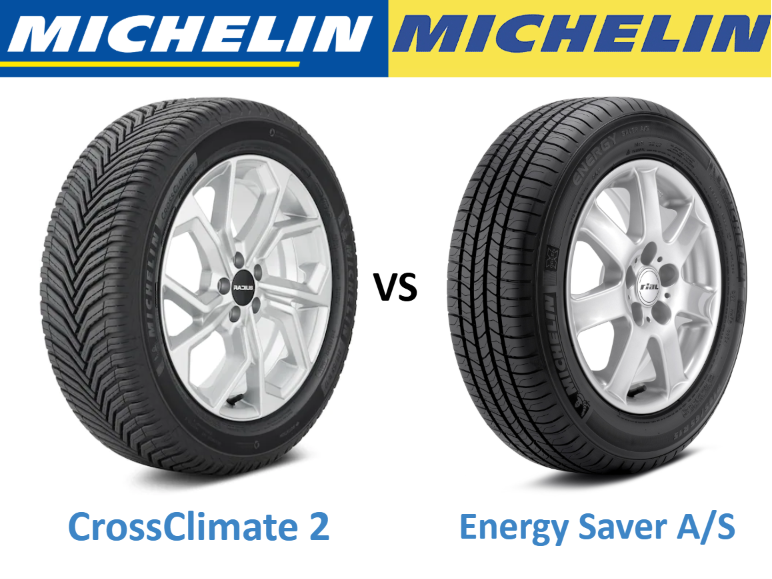
The Michelin CrossClimate 2 vs Michelin Energy Saver A/S is a battle between two very different Michelin philosophies. On one side, the CrossClimate 2 is the all-weather weapon, built to handle dry roads, rain, and real snow with one tire. On the other side, the Energy Saver A/S is the efficiency-focused all-season tire, designed to stretch fuel economy, comfort, and tread life for everyday driving. So the question is simple: do you choose the tire that gives you maximum weather confidence, or the one built to save energy mile after mile?
Table of Contents
Results : Michelin CrossClimate 2 vs Michelin Energy Saver A/S
The test results are based on Treadwell data from Discount Tire. The graph below compares the Michelin CrossClimate 2 vs Michelin Energy Saver A/S across key performance categories.
For subjective evaluations, each point is treated as equivalent to a 5% difference. For example, if Tire A scores a 4 and Tire B scores a 3, Tire A is considered 5% better than Tire B in that category.
Wet
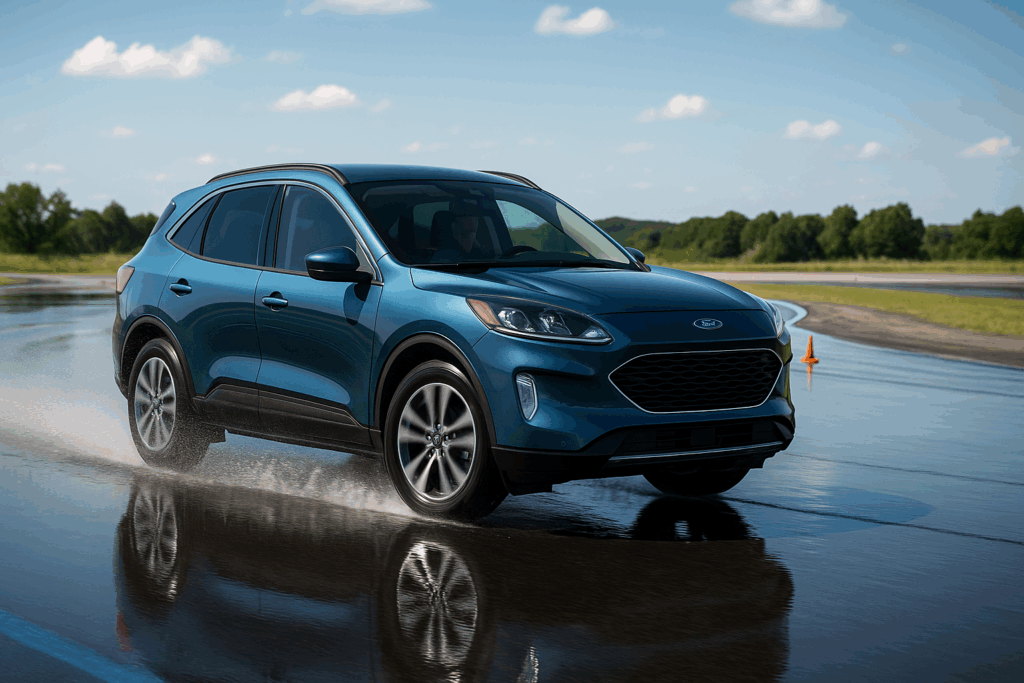
In the wet, the Michelin CrossClimate 2 has the clear edge. It stops 34 feet shorter than the Michelin Energy Saver A/S, with the Energy Saver performing 20% worse in wet braking. Wet handling is closer, with the CrossClimate 2 scoring 0.50 points higher, while the Energy Saver is only 2.5% behind. Overall, the CrossClimate 2 is the stronger wet tire, especially when braking safety matters most.
Energy Saver A/S :
- -20% Wet Braking
- -2.5% Wet Handling
Winter
In winter performance, the Michelin CrossClimate 2 is far stronger, scoring 4.50 compared with 2.00 for the Michelin Energy Saver A/S. That is a 2.50-point advantage, with the Energy Saver performing 12.5% worse based on the rating. Overall, this is where the CrossClimate 2 clearly proves its all-weather strength, while the Energy Saver A/S is much more limited in winter conditions.
Energy Saver A/S :
- -12.5% Snow
Mileage
For tread life, the Michelin CrossClimate 2 lasts much longer, with a median mileage of 48,500 miles compared with 34,500 miles for the Michelin Energy Saver A/S. That is a 14,000-mile advantage, with the Energy Saver performing 29% worse. Overall, the CrossClimate 2 delivers a clear durability advantage, while the Energy Saver A/S wears out much earlier.
Energy Saver A/S :
- -29% Mileage (Median)
Dry
In dry braking, the Michelin CrossClimate 2 stops 17 feet shorter than the Michelin Energy Saver A/S, with the Energy Saver performing 13% worse. Steering response is equal, with both tires scoring 3.50 out of 5, showing no difference and a 0% gap. Overall, the CrossClimate 2 has the stronger dry braking performance, while steering feel is evenly matched.
Energy Saver A/S :
- -13% Dry Braking
- 0% Dry Handling
Noise Vibration & Harshness (NVH)
For quiet ride, the Michelin Energy Saver A/S is better, scoring 4 compared with 3 for the CrossClimate 2. That is a 1-point advantage, with the Energy Saver performing 5% better. Ride comfort is also better on the Energy Saver A/S, scoring 3.5 versus 3, giving it a 0.50-point advantage and a 2.5% gain. Overall, the Energy Saver A/S is the more comfortable and quieter tire, while the CrossClimate 2 gives up some refinement for stronger all-weather performance.
Energy Saver A/S :
- +5% Quiet Ride
- +2.5% Comfort
Price
For price, the Michelin Energy Saver A/S is slightly cheaper at $242 compared with $250 for the CrossClimate 2 in size 235/45R18. That is an $8 advantage, making the Energy Saver A/S around 3% cheaper. Overall, the price gap is small, so the Energy Saver A/S wins on cost, but the CrossClimate 2 may justify the extra money with stronger all-weather performance.
Tire size: 235/45R18
- CrossClimate 2 : $ 250
- Energy Saver A/S : $ 242
Difference: -3% more cheaper for Energy Saver A/S
Conclusion:
As a tire expert, I would recommend the Michelin CrossClimate 2 for sure. It has the clear advantage in wet braking, dry braking, winter grip, and tread life, making it the safer and more complete tire overall. The Michelin Energy Saver A/S still has its strengths: it is slightly cheaper, quieter, more comfortable, and focused on efficiency. But for only a small price difference, the CrossClimate 2 gives a much bigger performance advantage where it matters most, especially in braking and bad-weather confidence.
Dr Edwin Pang