
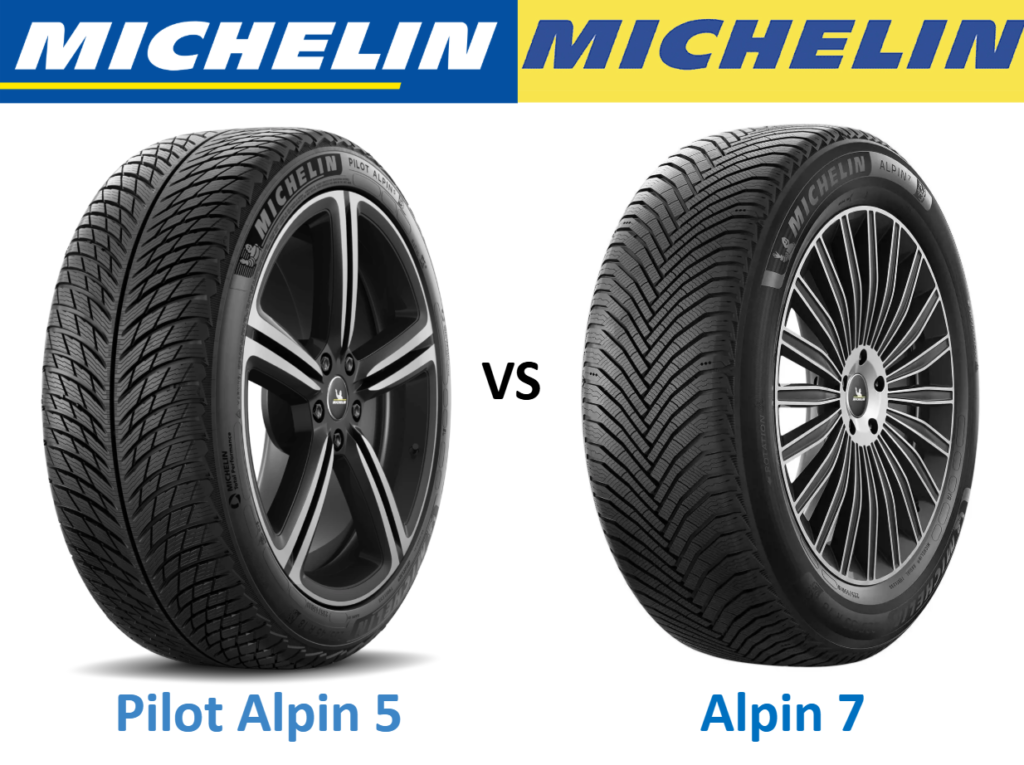
Michelin Alpin 7 vs Michelin Pilot Alpin 5: Same brand. Two winter contenders. Which Michelin deserves your money? The Alpin 7 generally covers smaller sizes and everyday cars, while the Pilot Alpin 5 targets larger sizes and performance cars. But if you’re lucky, both come in your size—and that’s where the battle gets interesting. From wet-road braking to snow-covered corners, which Central European winter tire should you choose? Let’s put these Michelin stablemates head-to-head!
Table of Contents
Results: Michelin Alpin 7 vs Michelin Pilot Alpin 5
Results below were taken from 2026 Tyre Review’s Winter range Test with a total of 6 tires tested. The graph below shows the comparison between Michelin Alpin 7 vs Michelin Pilot Alpin 5 based on the relevant performance category. The Michelin Alpin 7 was set as a reference hence at the 100% mark.
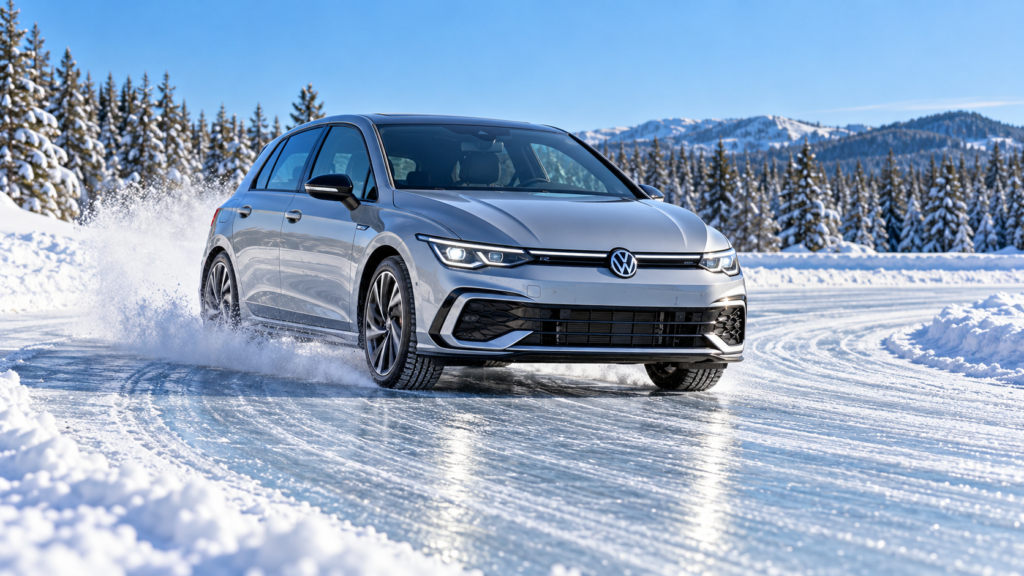
Since we are talking about the middle European winter segment with both tires having the converted 3 peak mountain logo, snow performances was tested. The tire size of interest is 225/40 R18 which is a common tire size for BMW 3 Series & Audi A3. You can check out our latest tire size table for more information. The testing vehicle is a VW Golf 7.
Snow
The Michelin Pilot Alpin 5 stops 0.34 metres shorter on snow, a 2% advantage, and accelerates 0.08 seconds quicker, also a 2% advantage. Its snow handling lap is 0.45 seconds faster, but the percentage difference rounds to 0%.
Overall, the Pilot Alpin 5 has a small advantage in snow braking and acceleration, while snow handling is effectively level.
Pilot Alpin 5 :
- +2% in snow braking
- +2% in snow acceleration
- 0% in snow handling
Ice
The Michelin Pilot Alpin 5 stops 0.29 metres shorter on ice, a 2% advantage over the Alpin 7. However, it takes 0.21 seconds longer to accelerate, putting it 3% behind the Alpin 7. Overall, the Pilot Alpin 5 has a slight edge in ice braking, while the Alpin 7 gets you moving quicker.
Pilot Alpin 5 :
- +2% in ice braking
- -3% in ice acceleration
Wet
The Michelin Pilot Alpin 5 stops 0.7 metres shorter in wet braking than the Hankook Winter i*cept evo 4—a 1% advantage. Michelin is also 2.3 km/h faster in wet handling, giving it a 3% advantage. Straight aquaplaning is effectively equal, with Michelin only 0.1 km/h ahead, rounding to a 0% difference.
Overall, Michelin delivers better wet handling and slightly shorter braking, while aquaplaning resistance is essentially identical.
Pilot Alpin 5 :
- +2% in wet braking
- 0% in wet handling
- -4% in straight aquaplaning
Dry
The Michelin Pilot Alpin 5 stops 2.20 metres shorter in dry braking, a 6% advantage over the Alpin 7. It also completes the dry handling lap 1.70 seconds quicker, a 2% advantage.
Overall, the Pilot Alpin 5 wins both dry tests, with a clearer advantage in braking and a smaller edge in handling.
Pilot Alpin 5 :
- +6% in dry braking
- +2% in dry handling
Rolling Resistance
The Michelin Pilot Alpin 5 has 0.64 kg/t higher rolling resistance, putting it 7% behind the Alpin 7. Overall, the Alpin 7 rolls more efficiently, giving it an advantage in reducing fuel or energy consumption.
Pilot Alpin 5 :
- -7% in Rolling resistance
Price
In 235/45 R18, the Michelin Pilot Alpin 5 costs €196 per tire, making it €4 cheaper than the €200 Alpin 7, a 2% saving. That adds up to €16 saved on a set of four, giving the Pilot Alpin 5 a small price advantage.
Tire size: 235/45 R18
- Alpin 7 : € 200
- Pilot Alpin 5 : € 196
Difference: -2% more cheaper for Pilot Alpin 5
Conclusion from a Tire Expert’s Perspective:
As a tire expert, I’d choose the Michelin Pilot Alpin 5 for its stronger dry braking and handling, slightly better wet and snow braking, and lower price. The trade-off is higher rolling resistance and weaker aquaplaning resistance.
The Michelin Alpin 7 would be my pick for better efficiency and standing-water protection, plus quicker acceleration on ice. Ultimately, I’d base the choice on whether I valued braking and handling or efficiency and aquaplaning resistance more.
Dr Edwin Pang