
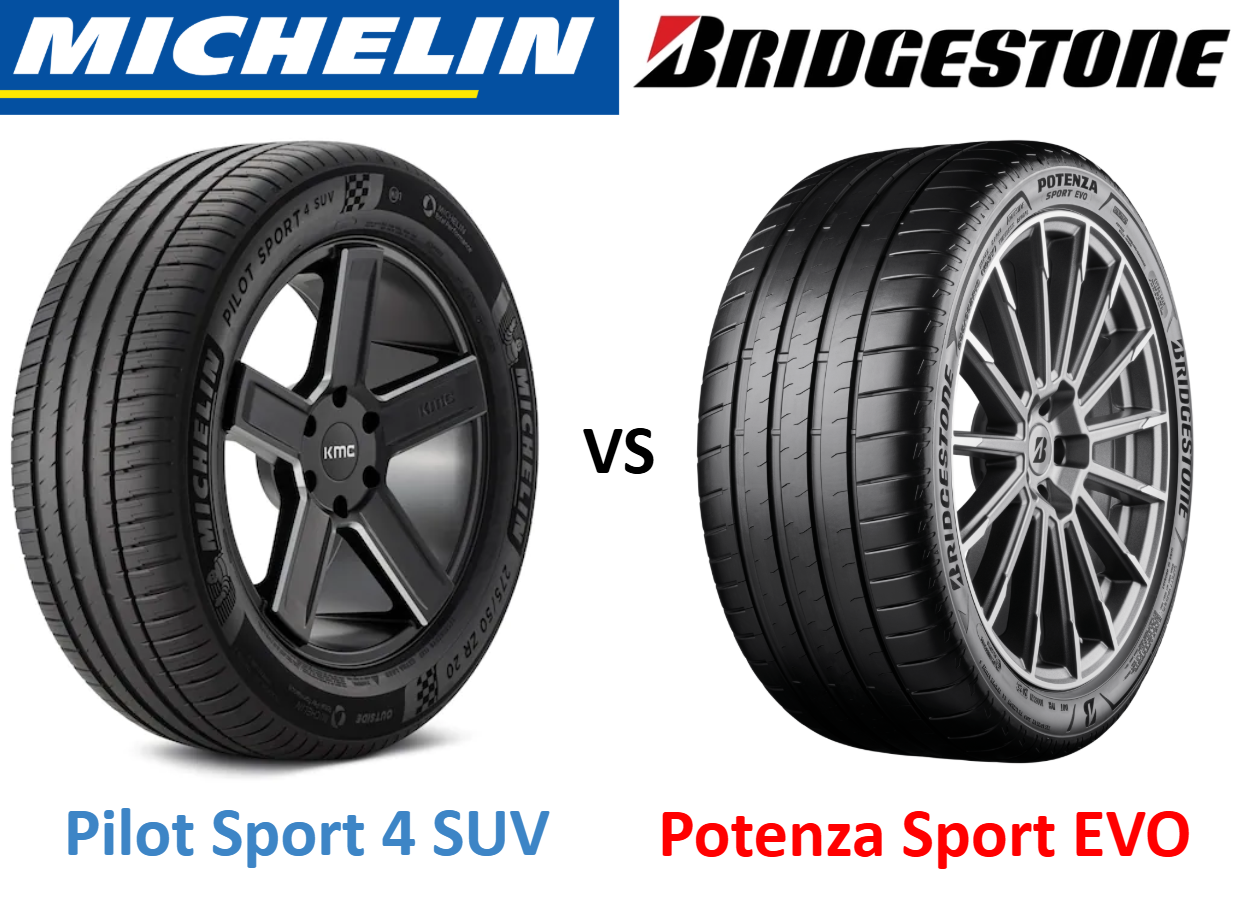
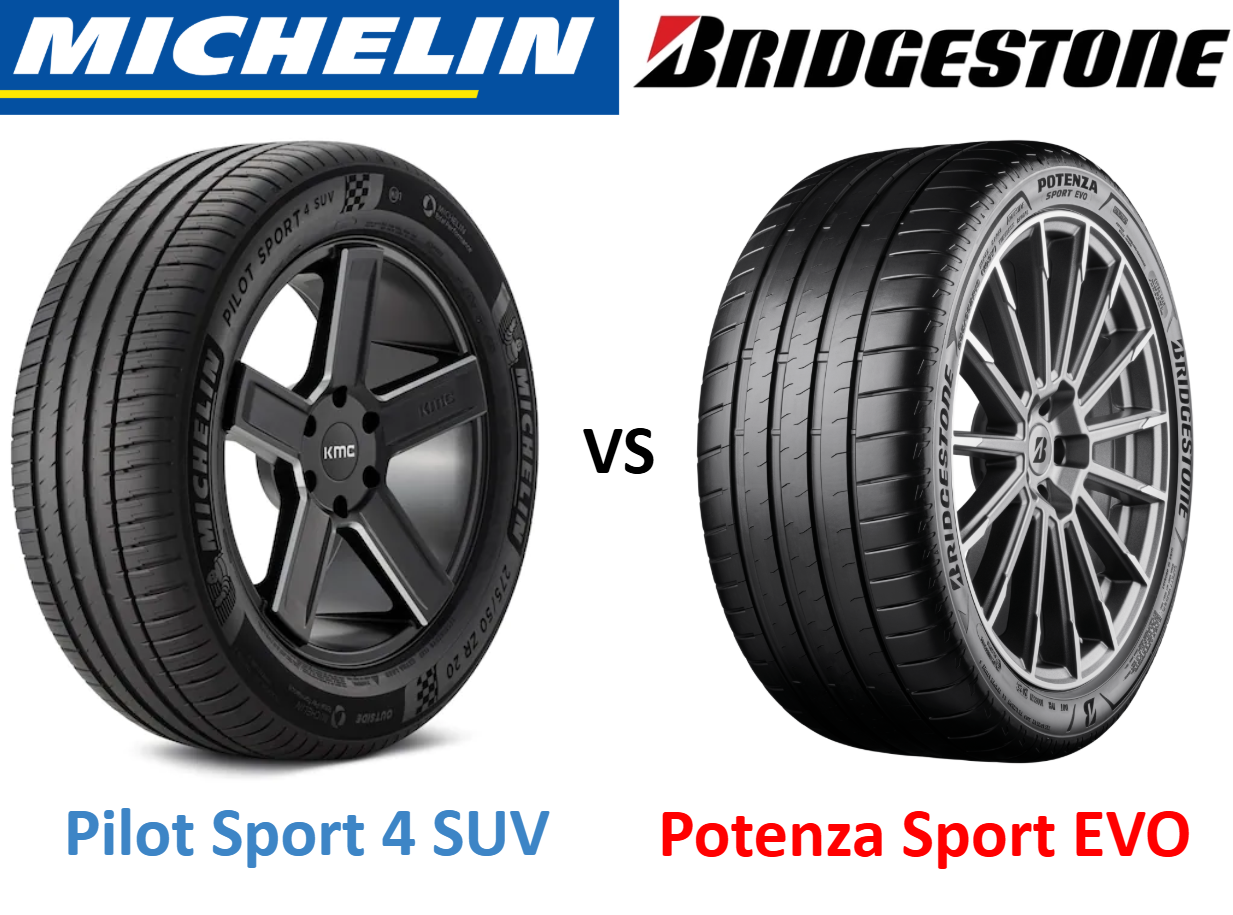
Michelin Pilot Sport 4 SUV vs Bridgestone Potenza Sport Evo — a true clash in the ultra-high performance SUV segment, where the 2019-established benchmark PS4 SUV goes head-to-head against Bridgestone’s all-new 2026 Potenza Sport Evo, a next-generation challenger built to push performance limits; so the question is simple: can the new contender dethrone the proven king, or does the old guard still dominate? Let’s find out.
Table of Contents
Results: Michelin Pilot Sport 4 SUV vs Bridgestone Potenza Sport Evo
The results presented here are from Auto Bild All Rad’s 2026 Summer SUV Tire Test, where 9 of the best summer tire models were selected. The accompanying graph provides a side-by-side comparison of the Michelin Pilot Sport 4 SUV vs Bridgestone Potenza Sport Evo across various performance categories, with the Michelin Pilot Sport 4 SUV serving as the benchmark at 100%.
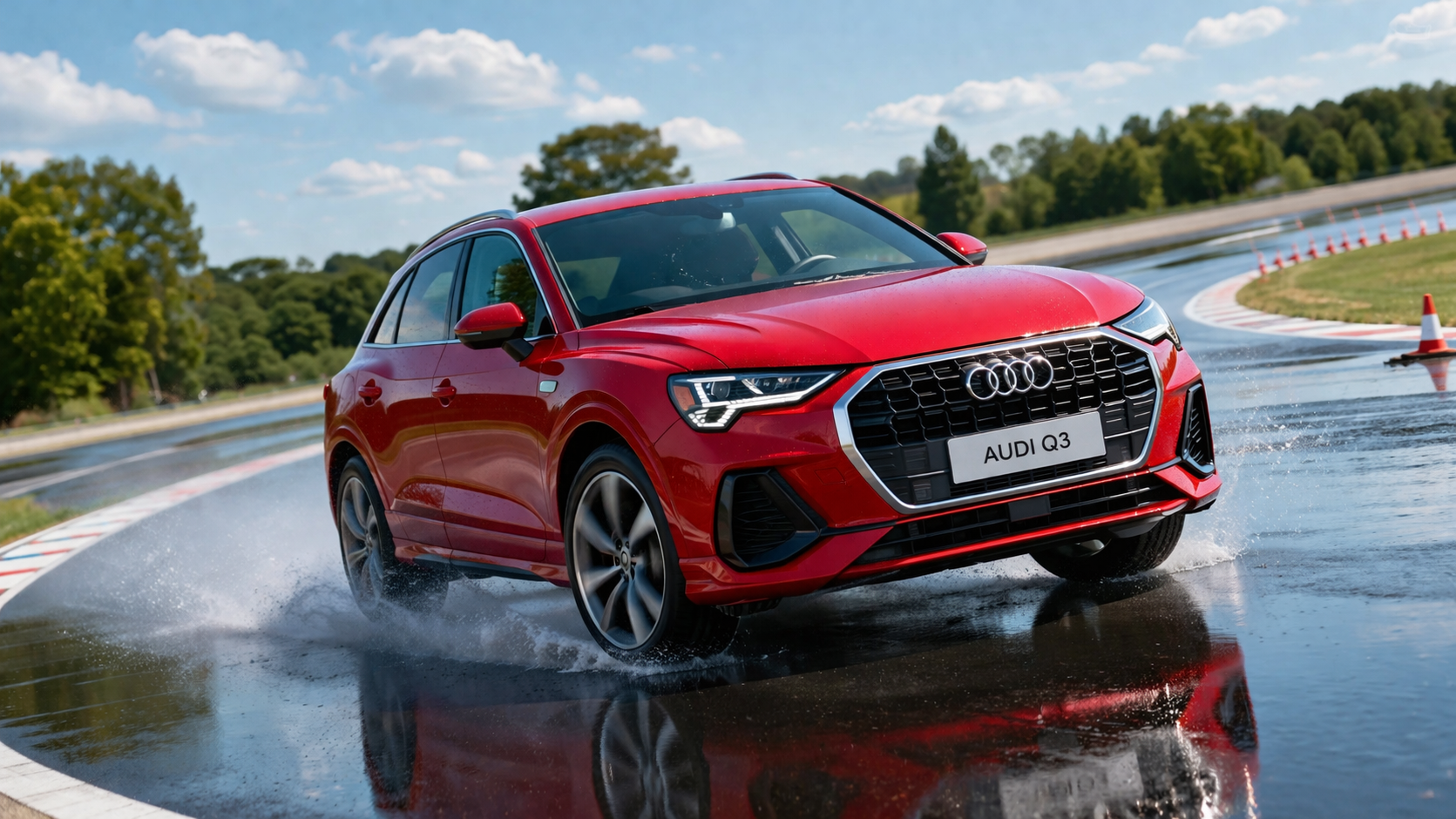
The tire size of interest is the 255/45R19 tire size, a popular choice for vehicles like the VW Tiguan & Audi Q3. For further insights into various tire sizes, feel free to consult our latest tire size table. The tests were conducted using a Audi Q3 as the test vehicle.
Wet
In wet braking, the Bridgestone Potenza Sport Evo stops 0.7 meters shorter than the Michelin Pilot Sport 4 SUV, translating to a 1% advantage. In wet handling, it carries 2.1 km/h higher speed, equivalent to a 2% gain, showing a clear edge in lateral grip and cornering confidence.
However, in straight-line aquaplaning, the Michelin Pilot Sport 4 SUV maintains 3.7 km/h higher speed, which reflects a 4% advantage, highlighting better resistance in deeper water. Overall, the Potenza Sport Evo leads in outright wet performance, while the Pilot Sport 4 SUV offers stronger aquaplaning safety, making it a well-balanced trade-off.
Potenza Sport Evo :
- +1% in wet braking
- +2% in wet handling
- -4% in aquaplaning
Dry
In dry braking, the Bridgestone Potenza Sport Evo stops 1.0 meter shorter than the Michelin Pilot Sport 4 SUV, translating to a 3% advantage. In dry handling, it carries 2.6 km/h higher speed, which also reflects a 3% gain, showing stronger grip and sharper response in dry conditions.
Overall, the Potenza Sport Evo clearly leads in dry performance, delivering both shorter braking distances and higher cornering speeds, reinforcing its position as the more aggressive and performance-focused option.
Potenza Sport Evo :
- +3% in dry braking
- +3% in dry handling
Noise
In noise performance, the Michelin Pilot Sport 4 SUV is 0.7 dB quieter than the Bridgestone Potenza Sport Evo, which translates to a 1% advantage, offering a slightly more refined and comfortable driving experience.
Potenza Sport Evo :
- -1% in noise (+0.7 dB)
Efficinecy
In rolling resistance, the Michelin Pilot Sport 4 SUV requires 0.50 N/kN less force than the Bridgestone Potenza Sport Evo, which translates to a 6% advantage, indicating better efficiency and lower energy consumption.
Overall, the Pilot Sport 4 SUV clearly leads in efficiency, making it the better choice for fuel economy or EV range, while the Potenza Sport Evo trades this off for higher performance.
Potenza Sport Evo :
- -6% in rolling resistance
Price
For tire size 255/45R19, the Bridgestone Potenza Sport Evo is €24 cheaper than the Michelin Pilot Sport 4 SUV, which translates to a 12% lower price, making it the more value-oriented option.
Tire size: 255/45R19
- Pilot Sport 4 SUV : € 224
- Potenza Sport Evo : € 200
Difference: -12% more cheaper for Potenza Sport Evo
Summary
From my perspective as a tire expert, the Bridgestone Potenza Sport Evo stands out with stronger dry and wet grip, delivering shorter braking distances and higher handling limits, while also offering a more attractive price point. On the other hand, the Michelin Pilot Sport 4 SUV still holds its ground with better aquaplaning resistance, lower noise, and superior rolling resistance, making it the more balanced and efficient choice for everyday driving. Ultimately, it comes down to your priority — maximum performance with better value, or well-rounded safety and efficiency.
Dr Edwin Pang