
Michelin Primacy 5 versus Dunlop Blue Response TG — a battle between refined evolution and a brand rebirth. Launched in 2025, the Primacy 5 represents Michelin’s latest step in the touring segment, focusing on balanced wet safety, comfort, and efficiency, while the 2026 Dunlop Blue Response TG marks Sumitomo’s official comeback in Europe, built from the ground up under full brand control. So the question is simple: do you trust Michelin’s proven progression, or is Dunlop’s new era ready to shake up the segment?
Table of Contents
Results: Michelin Primacy 5 vs Dunlop Blue Response TG
The results presented here are from Auto Motor Sport’s 2026 Summer Tire Test, where 8 of the best summer tire models were selected. The accompanying graph provides a side-by-side comparison of the Michelin Primacy 5 vs Dunlop Blue Response TG across various performance categories, with the Michelin Primacy 5 serving as the benchmark at 100%.
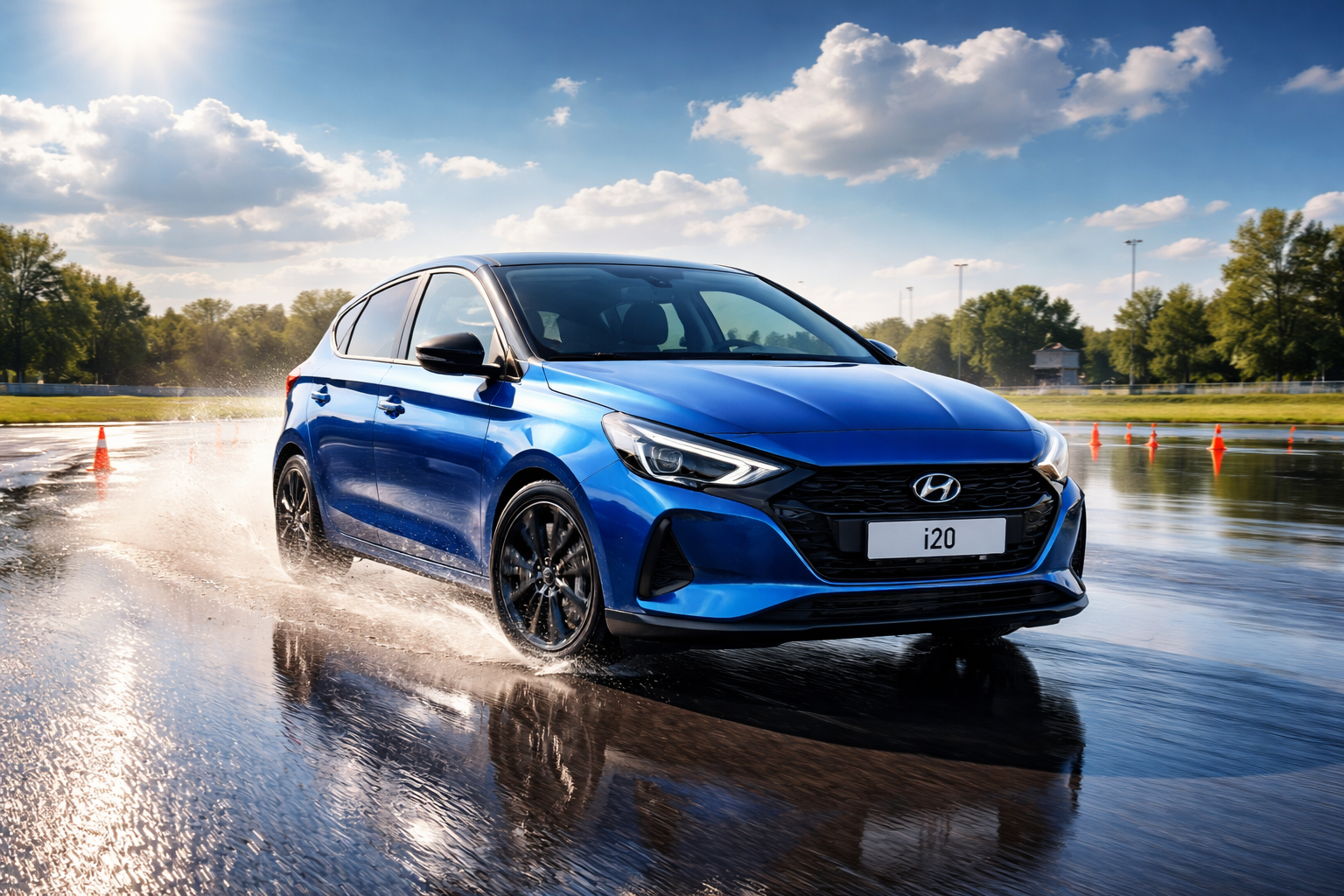
The tire size of interest is the195/55R16 tire size, a popular choice for vehicles like the VW Polo & Hyundai i20. For further insights into various tire sizes, feel free to consult our latest tire size table. The tests were conducted using a Hyundai i20 as the test vehicle.
Wet
In wet braking, the Dunlop Blue Response TG stops 2.3 meters shorter than the Michelin Primacy 5, giving it a 6% advantage. In wet handling, it carries 1.1 km/h more speed, translating to a 2% improvement. In straight aquaplaning, both tires are effectively identical with just a 0.1 km/h difference, which equals a 0% gap.
Overall, the Dunlop Blue Response TG clearly leads in wet performance, offering better braking and handling, while both tires remain equally strong in aquaplaning resistance.
Blue Response TG :
- +6% in wet braking
- +2% in wet handling
- 0% in aquaplaning
Dry
In dry braking, the Dunlop Blue Response TG stops 2.2 meters shorter than the Michelin Primacy 5, delivering a 6% advantage. In dry handling, it carries 0.9 km/h more speed, which translates to a 1% improvement.
Overall, the Dunlop Blue Response TG holds a slight edge in dry performance, with a clearer advantage in braking while both tires remain very close in handling.
Blue Response TG :
- +6% in dry braking
- +1% in dry handling
Noise
In noise performance, the Dunlop Blue Response TG is 0.3 dB quieter than the Michelin Primacy 5, which translates to a 0% difference in real-world terms.
Blue Response TG :
- ~0% in noise (-0.3 dB)
Efficinecy
In rolling resistance, the Michelin Primacy 5 is 1.2 N/kN lower than the Dunlop Blue Response TG, giving it a 14% advantage in efficiency. In energy consumption, the Michelin again leads with 0.7 kWh/100km lower usage, translating to a 6% improvement.
Overall, the Michelin Primacy 5 clearly outperforms in efficiency, offering lower rolling resistance and better energy consumption, making it the more fuel-efficient choice.
Blue Response TG :
- -14% in rolling resistance
- -6% in energy consumption
Price
For the 195/55R16 size, the Dunlop Blue Response TG is €13 cheaper than the Michelin Primacy 5, which translates to a 12% lower price.
Tire size: 195/55R16
- Primacy 5 : € 123
- Blue Response TG : € 110
Difference: -12% more cheaper for Blue Response TG
Summary
From my perspective as a tire engineer, the Dunlop Blue Response TG clearly stands out with stronger wet and dry performance, shorter braking distances, and a more attractive price point, making it a very compelling new-generation contender. However, the Michelin Primacy 5 still holds a key advantage in efficiency, with lower rolling resistance and energy consumption, which typically translates to better long-term running costs.
That said, I would be cautious here — there are no wear results, and we don’t yet know how much of Dunlop’s performance advantage comes at the expense of mileage or long-term consistency, especially in wet conditions.
Dr Edwin Pang