
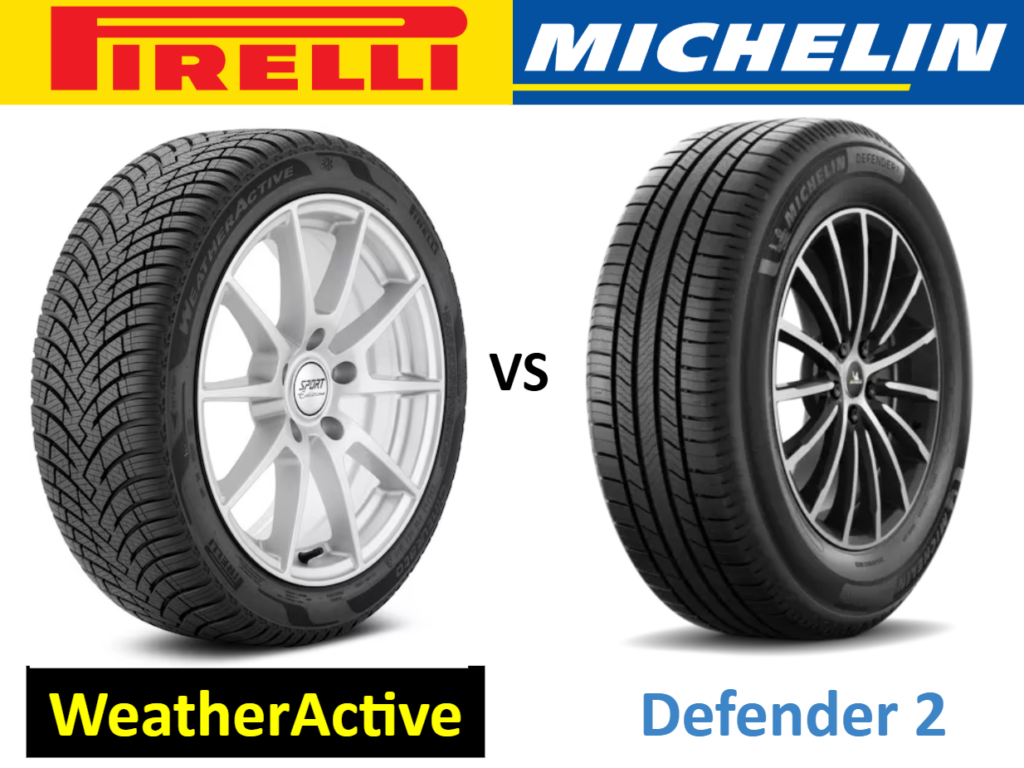
Pirelli Cinturato WeatherActive vs Michelin Defender 2 — a clash of priorities in the all-season world.
The WeatherActive showcases Pirelli’s all-weather philosophy, tuned for confident traction when temperatures drop and conditions get unpredictable. The Defender 2 embodies Michelin’s mileage-first approach, built to deliver exceptional longevity with calm, consistent road manners. When winter whispers and the odometer keeps climbing, only one philosophy truly fits your driving life — and that’s where this battle gets interesting.
Table of Contents
Results: Pirelli Cinturato WeatherActive vs Michelin Defender 2
Results below were taken from the Tire Rack’s “Premium Touring Tires to Elevating the Journey – 2024” test. A total of 8 tires were tested this time around in Tire Rack’s own proving ground. The graph below shows the comparison between Pirelli Cinturato WeatherActive vs Michelin Defender 2 based on the relevant performance category. The Pirelli Cinturato WeatherActive was set as a reference hence at the 100% mark. Note that for subjective evaluation, we equate 1 point as 5%. Hence for example if tire A is graded 7 while tire B is graded 6, A is better than B by 5%.
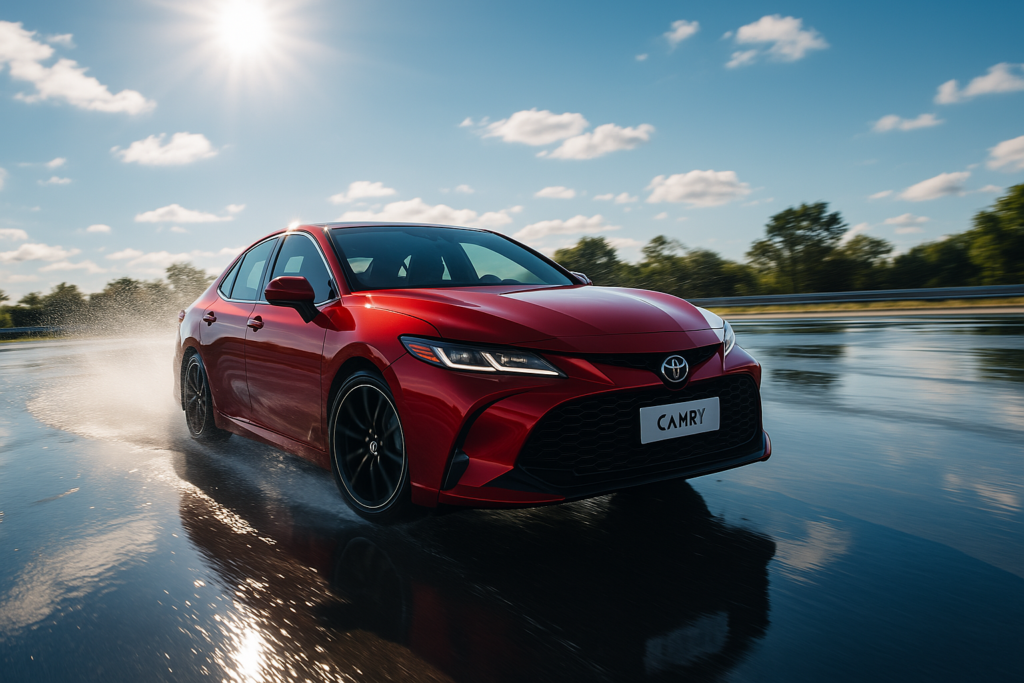
As both tires are categorized as all season tires, Tire Rack has included snow & ice in its testing portfolio. The tire size of interest is 215/55R17 which is a common tire size for Chevrolet Cruze Eco & Toyota Camry Hybrid XLE. You can check out our latest tire size table for more information. The testing vehicle is a 2025 Toyota Camry.
Wet
In wet braking, the Pirelli Cinturato WeatherActive stops 2.74 meters shorter than the Michelin Defender 2, giving Pirelli a 6% advantage in outright wet stopping power. In wet handling, the WeatherActive completes the lap 1.16 seconds quicker, translating to a 3% faster performance compared with the Defender 2. Subjectively, the Pirelli also feels more confident, scoring 0.75 points higher, which equates to roughly a 4% improvement in perceived wet grip and control.
Overall, the WeatherActive clearly leans into wet-weather confidence and grip, while the Defender 2 prioritises long-term stability and mileage — but when the road turns wet, Pirelli holds a consistent and measurable edge.
Defender 2 :
- -6% in wet braking
- -3% in wet handling (subj)
- -4% in wet handling (lap time)
Snow
In snow braking, the Pirelli Cinturato WeatherActive stops 3.13 meters shorter than the Michelin Defender 2, giving Pirelli a 12% advantage in snow stopping performance. In snow traction, the WeatherActive accelerates 0.63 seconds quicker (5.54 s vs 6.17 s), translating to a 10% improvement in pulling power on low-grip surfaces. In snow handling, the Pirelli completes the course 3.07 seconds faster, which works out to a 5% gain in overall control and stability compared with the Defender 2.
Overall, the WeatherActive clearly leans into genuine winter capability, delivering stronger braking, quicker traction, and more controlled handling in snow, while the Defender 2 remains usable but visibly outpaced when conditions turn truly wintry.
Defender 2 :
- -12% in Snow braking
- -10% in Snow traction
- -5% in Snow handling(lap time)
Ice
In ice braking, the Pirelli Cinturato WeatherActive stops 2.86 meters shorter than the Michelin Defender 2, giving Pirelli a 17% advantage in outright ice stopping performance.
Defender 2 :
- -17% in Ice braking
Mileage
In mileage warranty, the Michelin Defender 2 offers 20,000 miles more coverage than the Pirelli Cinturato WeatherActive (80,000 vs 60,000 miles), giving Michelin a 33% advantage in warranty-backed longevity.
Overall, this clearly reinforces the Defender 2’s mileage-first philosophy, while the WeatherActive trades some long-term endurance for broader all-weather and cold-condition capability.
Dry
In dry braking, the Michelin Defender 2 stops 2.13 meters shorter than the Pirelli Cinturato WeatherActive, giving Michelin a 5% advantage in outright dry stopping performance. However, in subjective dry handling, the Defender 2 holds only a 0.06-point lead (6.75 vs 6.69), which translates to about a 0% difference — effectively indistinguishable behind the wheel.
Overall, the Defender 2 shows a small edge in dry braking precision, while both tires feel nearly identical in dry handling — reinforcing that this comparison is less about dry-road performance gaps and more about where each tire truly plays to its strengths elsewhere.
Defender 2 :
- +5% in dry braking
- ~0% in dry handling (subj)
Price
At 215/55R17, the Pirelli Cinturato WeatherActive is priced at $176, while the Michelin Defender 2 comes in at $207. That makes the Defender 2 $31 more expensive, or about 18% higher than the WeatherActive.
Overall, the pricing aligns perfectly with each tire’s positioning — Michelin charges a premium for long-term mileage assurance, while Pirelli undercuts on price to deliver stronger all-weather capability and cold-condition confidence.
Tire size: 215/55R17
- Cinturato WeatherActive : $ 176
- Defender 2 : $ 207
Difference: +18% more expensive for Defender 2.
Summary
From my perspective as a tire engineer, this comparison is really about priority rather than right or wrong. The Pirelli Cinturato WeatherActive clearly plays to drivers who value all-weather confidence — stronger wet, snow, and ice performance, paired with a more approachable price point, make it the safer choice when conditions are unpredictable. The Michelin Defender 2, on the other hand, excels where Michelin traditionally dominates: exceptional mileage, consistency, and long-term ownership value, backed by a class-leading warranty.
Dr Edwin Pang