
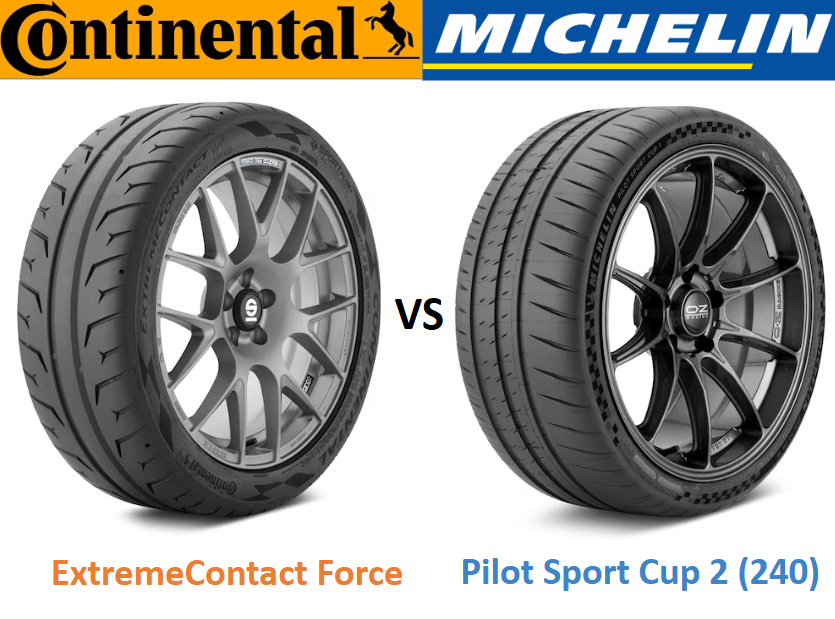
Continental ExtremeContact Force vs Michelin Pilot Sport Cup 2 (240): Two street-legal track weapons go head-to-head: the Continental ExtremeContact Force and the Michelin Pilot Sport Cup 2 (240). Both promise razor-sharp grip on track while staying compliant enough for the street. The Force positions itself as the endurance hero that blends balance and drivability, while the Cup 2 (240) is the raw precision tool with motorsport DNA. The real question is — do you want all-round usability, or the ultimate edge when the stopwatch is running?
Table of Contents
Results: Continental ExtremeContact Force vs Michelin Pilot Sport Cup 2 (240)
Results below were taken from Tire Rack’s 2025 Extreme Performance Summer Tire Real-World Ride & Drive Test with a total of 8 tires tested. The graph below shows the comparison between Continental ExtremeContact Force vs Michelin Pilot Sport Cup 2 (240) based on the relevant performance category. The Continental ExtremeContact Force was set as a reference hence at the 100% mark.

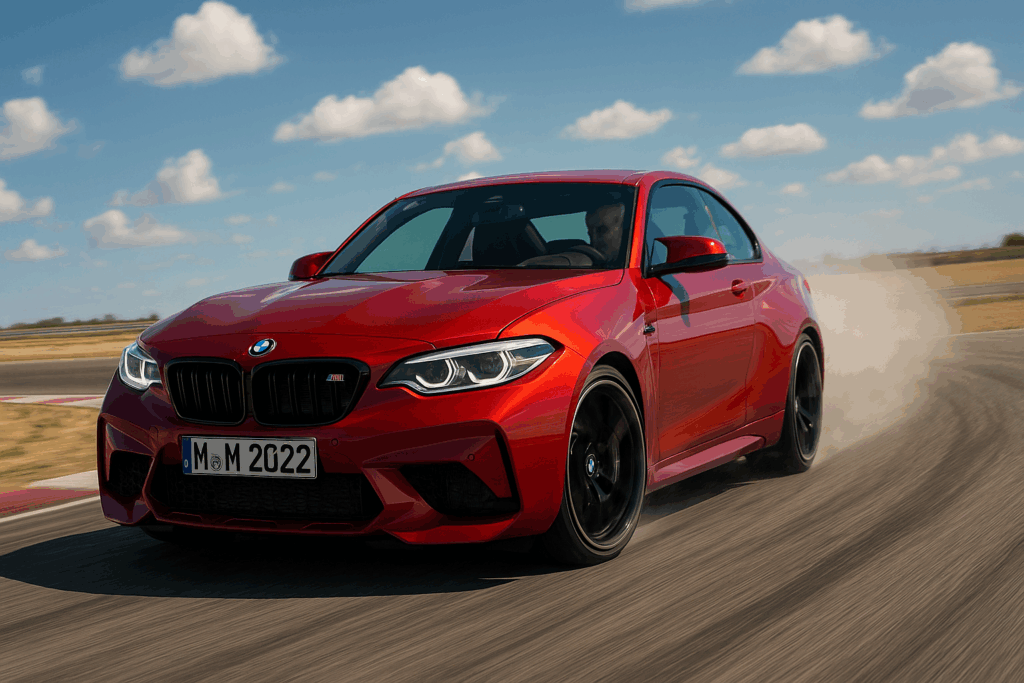
Since we are talking about the track usage tires, dry handling was tested extensively on a circuit track with both average lap time & fastest lap recorded. The tire size of interest is 275/35R18 which is a common tire size for BMW M5. You can check out our latest tire size table for more information. The testing vehicle is a BMW M2.
Dry
The Continental ExtremeContact Force stops from dry braking at 102.8 feet, compared to the Michelin Pilot Sport Cup 2 (240) at 99.7 feet, making the Michelin shorter by 3.1 feet — about 3% better. In dry handling scores, the Continental records 8.56 while the Michelin manages 8.19, giving the Continental a 2% advantage in subjective control. Looking at lap times, the Continental averages 101.76 seconds versus the Michelin’s 101.66 seconds, just 0.1 seconds slower — effectively equal. On fastest laps, the Continental clocks 101.05 while the Michelin edges it at 100.28, a 0.77 second difference or about 1% quicker.
Overall, the Cup 2 (240) excels in outright braking and ultimate pace, while the ExtremeContact Force feels more consistent and controllable over a stint.
Pilot Sport Cup 2 (240) :
- +3% in dry braking
- -2% in dry handling (Subjective)
- 0% in dry handling (Avg lap time)
- +1% in dry handling (Fastest lap time)
Wet
In wet braking, the Michelin Pilot Sport Cup 2 (240) stops in 157 feet, while the Continental ExtremeContact Force needs 168 feet. That’s an 11-foot gap, giving Michelin a 7% advantage. In subjective wet handling, the Continental scores 7.0 against Michelin’s 6.63, showing the Continental is about 2% better in feel and control. On the wet handling track, Michelin posts a 32.3-second lap compared to Continental’s 32.7, making it 0.4 seconds faster, around 1% better.
Overall, the Cup 2 (240) has the edge in braking and lap pace, while the ExtremeContact Force delivers a slightly more confidence-inspiring feel behind the wheel.
Pilot Sport Cup 2 (240) :
- +7% in wet braking
- -2% in wet handling (Subjective)
- +1% in wet handling (Lap time)
Price
In 275/35R18, the Continental ExtremeContact Force comes in at $373, while the Michelin Pilot Sport Cup 2 (240) is priced at $394. That makes the Michelin $21 higher, about 6% more expensive.
Tire size: 275/35R18
- ExtremeContact Force : $ 373
- Pilot Sport Cup 2 (240) : $ 394
Difference: +6% more expensive for Pilot Sport Cup 2 (240)
Conclusion from a Tire Expert’s Perspective:
From my perspective as a tire expert, the Michelin Pilot Sport Cup 2 (240) clearly shines when it comes to ultimate pace and braking power, especially in the wet, making it the sharper weapon for chasing lap times. The Continental ExtremeContact Force, on the other hand, delivers better steering feel, consistency, and overall drivability, while also being slightly easier on the wallet. In the end, Michelin is the choice if you want maximum edge, while Continental is the smarter pick for balanced performance on both road and track.
Dr Edwin Pang