
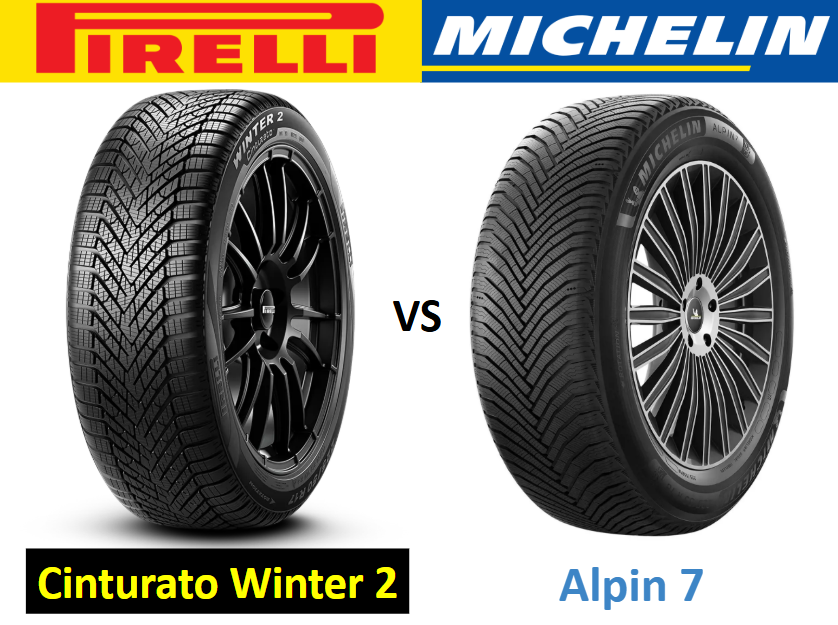
Pirelli Cinturato Winter 2 vs Michelin Alpin 7 — the Middle European winter showdown is here. On one side, the proven Italian contender with its sharp snow and wet credentials, on the other, Michelin’s all-new Alpin 7, successor to the legendary Alpin 6, aiming to reset the benchmark. Snow, ice, wet, and dry — this battle will decide who dominates the winter roads of Europe.
Table of Contents
Results: Pirelli Cinturato Winter 2 vs Michelin Alpin 7
Results below were taken from die-reifentester 2025 Winter Tire Test with a total of 8 tires tested including 1 reference all season tire. The graph below shows the comparison between Pirelli Cinturato Winter 2 vs Michelin Alpin 7 based on the relevant performance category. The Pirelli Cinturato Winter 2 was set as a reference hence at the 100% mark.

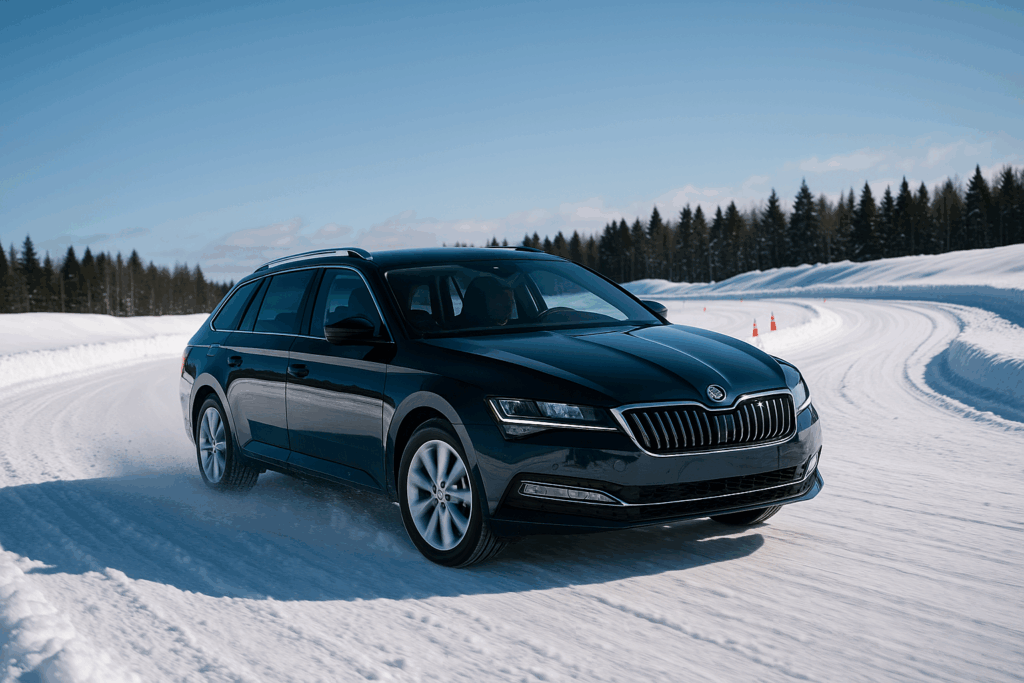
Since we are talking about the middle European winter segment with both tires having the converted 3 peak mountain logo, snow performances was tested. The tire size of interest is 215/55 R17 which is a common tire size for Toyota Camry. You can check out our latest tire size table for more information. The testing vehicle is a Skoda Superb Combi.
Wet
In wet braking, the Pirelli Cinturato Winter 2 stops at 31.25 meters while the Michelin Alpin 7 needs 31.66 meters, giving the Pirelli a 0.4 meter shorter stop, 1% better. In wet handling, the Michelin edges ahead with a 7.7/10 score compared to Pirelli’s 7.4/10, 1% stronger. For longitudinal aquaplaning, both are nearly identical with Pirelli clearing at 89.3 km/h and Michelin at 89.5 km/h, a 0.2 km/h difference, 0%.
Overall, Pirelli takes braking, Michelin counters with handling, and aquaplaning ends in a tie.
Alpin 7 :
- -1% in wet braking
- +1% in wet handling (subjective)
- 0% in longitudinal aquaplaning
Snow
In snow braking, the Pirelli Cinturato Winter 2 stops at 25.41 meters while the Michelin Alpin 7 needs 25.52 meters, giving Pirelli a 0.1 meter advantage, 0% difference. In snow handling, Pirelli scores 7.7/10 compared to Michelin’s 7.1/10, making it 3% stronger. For snow traction, Michelin pulls ahead with 2512 newtons against Pirelli’s 2459 newtons, a 53 newton edge, 2% better.
Overall, Pirelli dominates snow handling, Michelin delivers stronger traction, and braking is essentially even.
Alpin 7 :
- 0% in snow braking
- -3% in snow handling (subjective)
- +2% in snow traction
Dry
In dry braking, the Michelin Alpin 7 stops at 41.59 meters while the Pirelli Cinturato Winter 2 needs 41.86 meters, giving Michelin a 0.3 meter advantage, 1% better. In dry handling, the Pirelli scores 7.4/10 compared to Michelin’s 7.3/10, making it 1% stronger. Overall, Michelin edges braking while Pirelli answers back in handling, leaving dry performance closely matched.
Alpin 7 :
- +1% in dry braking
- -1% in dry handling (subjective)
NVH
In interior noise, the Michelin Alpin 7 scores 8.0/10 against the Pirelli Cinturato Winter 2 at 7.6/10, giving Michelin a 0.4 point lead, 2% better. In ride comfort, Michelin again leads with 8.0/10 compared to Pirelli’s 7.7/10, a 0.3 point edge, 1% stronger.
Alpin 7 :
- +2% in interior noise
- +1% in comfort
Rolling Resistance
In rolling resistance, the Michelin Alpin 7 measures 6.9 N/kN while the Pirelli Cinturato Winter 2 is higher at 8.1 N/kN, giving Michelin a clear efficiency advantage of 1.2 N/kN, 17% better.
Alpin 7 :
- +17% in rolling resistance
Price
For tire size 215/55 R17, the Pirelli Cinturato Winter 2 is priced at €161 while the Michelin Alpin 7 costs €178, making the Michelin 11% more expensive.
Tire size: 215/55 R17
- Cinturato Winter 2 : € 161
- Alpin 7 : € 178
Difference: +11% more expensive for Alpin 7
Conclusion from a Tire Expert’s Perspective:
From my perspective as a tire expert, the Pirelli Cinturato Winter 2 delivers strong wet braking, sharper snow handling, and an attractive price point. The Michelin Alpin 7, however, stands out with better wet handling, stronger snow traction, lower rolling resistance for fuel savings, and better comfort. Both are excellent — with Pirelli focusing on grip and value, while Michelin leans toward efficiency and refinement.
Dr Edwin Pang