
Michelin X-Ice Snow vs Pirelli Ice Zero Asimmetrico: The Michelin X-Ice Snow, launched in 2020, goes head-to-head with the Pirelli Ice Zero Asimmetrico, introduced in 2023. Michelin’s X-Ice Snow has built a solid reputation for its exceptional winter performance, but can the newly launched Ice Zero Asimmetrico challenge its dominance? With Pirelli bringing fresh technology to the table, this battle in the winter studless segment promises to be an exciting clash of innovation and experience!
Table of Contents
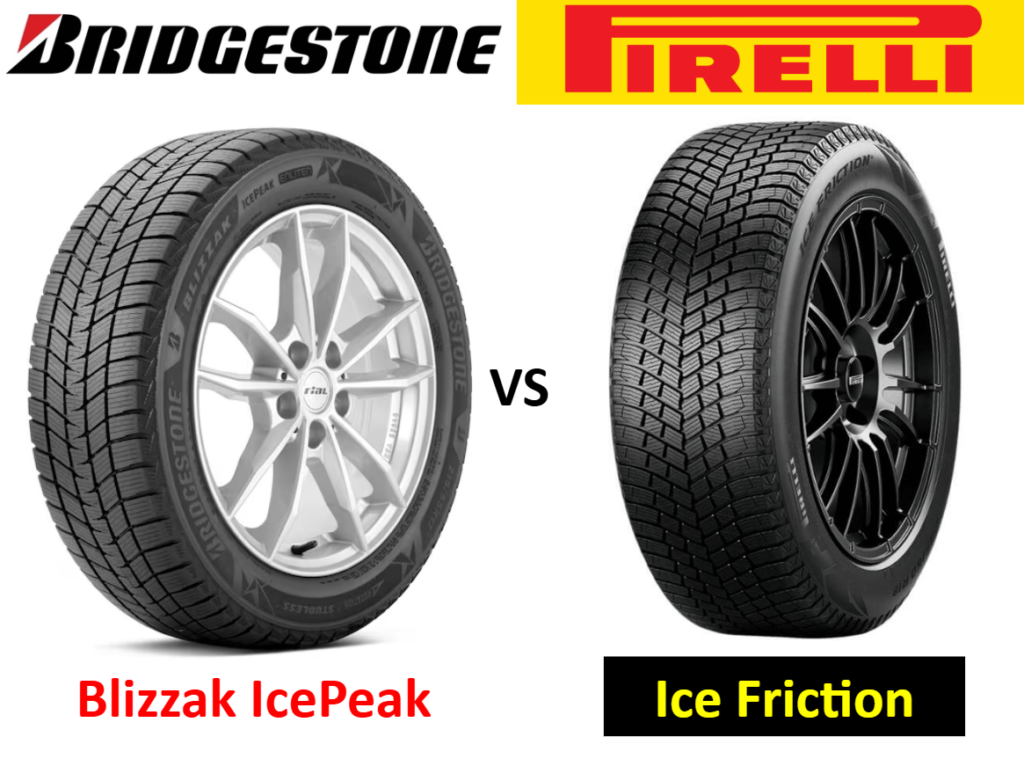
Results: Bridgestone Blizzak IcePeak vs Pirelli Ice Friction
Results below were taken from Canadian Tire’s Road Rated test with a total of 10 tires tested. The graph below shows the comparison between Bridgestone Blizzak IcePeak vs Pirelli Ice Friction based on the relevant performance category. The Bridgestone Blizzak IcePeak was set as a reference hence at the 100% mark.
Canadian Tire’s road-rated test consolidates all performance aspects—wet, dry, comfort, fuel economy, ice, and snow—into a single score for each category. While this approach provides a solid overall assessment, it does not isolate specific metrics like braking distance. However, the combined score still offers a reliable approximation of a tire’s performance across various conditions.
Ice
The Bridgestone Blizzak IcePeak outperforms the Pirelli Ice Friction by 8% in overall ice performance. This is the largest performance gap between the two tires, giving Bridgestone a clear advantage in icy conditions where traction and control are critical.
Ice Friction :
- -8% in ice
Snow
The Pirelli Ice Friction holds a slight 1% advantage over the Bridgestone Blizzak IcePeak in overall snow performance. However, the difference is minimal, with both tires delivering nearly identical capabilities on snow-covered roads.
Ice Friction :
- +1% in snow
Wet
The Pirelli Ice Friction performs 3% better than the Bridgestone Blizzak IcePeak in wet conditions. This gives Pirelli a modest advantage in overall wet-road grip and handling, making it slightly more competitive when driving on rain-soaked surfaces.
Ice Friction :
- +3% in wet
Dry
The Bridgestone Blizzak IcePeak holds a 2% advantage over the Pirelli Ice Friction in overall dry performance. While the difference is relatively small, Bridgestone demonstrates slightly stronger performance on dry asphalt.
Ice Friction :
- -2% in dry
Comfort
Both the Bridgestone Blizzak IcePeak and Pirelli Ice Friction achieve identical comfort scores, with no difference in their overall ratings. This suggests both tires offer comparable levels of ride comfort and noise refinement during everyday driving
Ice Friction :
- 0% in comfort
Fuel Economy
The Pirelli Ice Friction achieves a slight 1% advantage over the Bridgestone Blizzak IcePeak in fuel economy. With such a small difference in the overall efficiency rating, both tires remain closely matched in their potential impact on fuel consumption.
Ice Friction :
- +1% in fuel economy
Price
For tire size 215/55 R17, the Bridgestone Blizzak IcePeak costs $185, compared with $207 for the Pirelli Ice Friction. This makes the Blizzak IcePeak $22 cheaper, or approximately 11% less expensive, while also delivering superior overall ice and dry performance.
Tire size: 215/55 R17
- Blizzak IcePeak : $ 185
Difference: Blizzak IcePeak is 11% cheaper than Ice Friction.
Conclusion
As a tire expert, I would personally lean toward the Bridgestone Blizzak IcePeak. Its 8% advantage in ice performance is the biggest difference in this comparison, and that matters when choosing a dedicated winter tire. It also performs 2% better on dry roads while costing 11% less. The Pirelli Ice Friction counters with slightly better snow, wet, and fuel economy scores, but these advantages are relatively small at just 1–3%. With comfort being identical, I believe the Blizzak IcePeak offers the stronger overall value, particularly for drivers who prioritize icy-road performance.
Dr Edwin Pang